- The Quick Answer: What to Do When Your AC Quits
- What Counts as an AC Emergency in Marco Island
- 6 Safe Checks Before You Call for Emergency AC Repair
- What NOT to Touch (and Why It Is Dangerous)
- When Waiting Until Morning Is the Wrong Call
- What an Emergency AC Technician Actually Does
- Emergency Repair Cost: What to Expect
- How to Avoid the Next 2 AM Breakdown
- Bottom Line
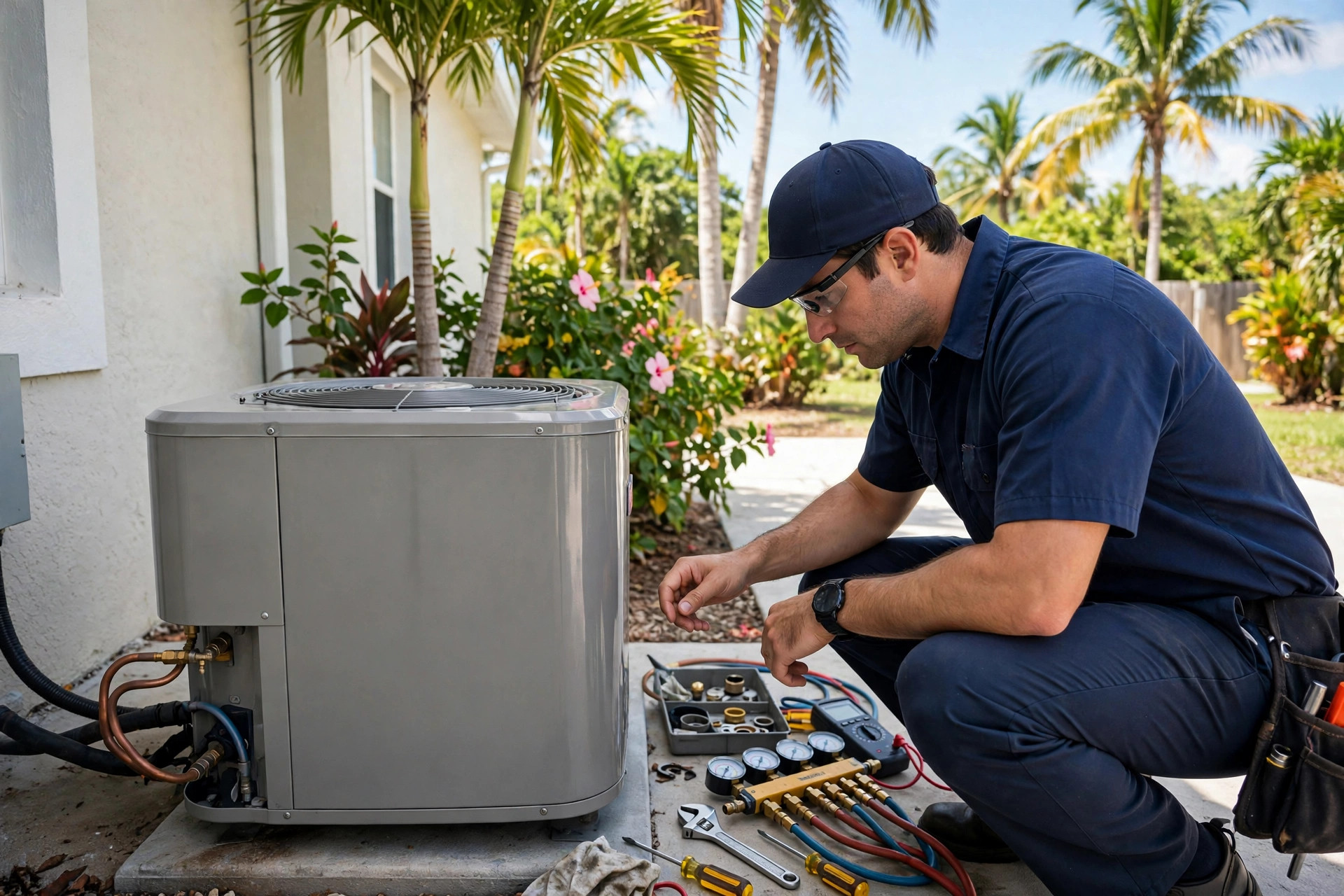
The Quick Answer: What to Do When Your AC Quits
If your AC stops on a hot Marco Island day: check the thermostat (Cool mode, working batteries), reset the breaker only once, swap in a clean air filter, and wait a few minutes for the built-in compressor delay. If it still will not run — or you smell burning, see ice, hear grinding, or the breaker trips again — shut it off and call for emergency AC repair. Those five minutes of safe checks resolve a surprising number of "emergencies," and the ones they do not resolve are exactly the ones a professional needs to see.
Now the details, in the order a technician would want you to handle them.
What Counts as an AC Emergency in Marco Island
Not every cooling problem needs a 2 AM service call. An emergency is any failure that creates a health or safety risk, threatens serious damage to the home or the system, or leaves the house without cooling during extreme heat. On Marco Island, where summer days regularly push indoor temperatures up fast, that bar gets met more often than up north.
Call for emergency AC repair if any of these are true:
- Complete failure during extreme heat. Indoor temperature climbs quickly once the system stops, and it becomes a health risk fast for elderly family members, infants, and anyone with a medical condition that needs climate control. Heat illness can develop in hours, not days.
- Burning smell or smoke from the unit or vents. This signals an electrical fault — an overheating motor, melting wiring, or a failed electrical component. Shut the system off and do not restart it. Electrical failures carry a real fire risk.
- The breaker trips every time the AC starts. Reset it once. If it trips again, leave it off. Repeated trips point to a shorted compressor, damaged wiring, or a grounded electrical component that a licensed technician must diagnose.
- Water leaking near electrical components. A clogged condensate drain can flood a drain pan, and water plus electricity is never something to watch and wait on. Drywall and flooring damage starts within hours.
- Hissing sounds, chemical odor, or ice on the coils. These point to a refrigerant leak. Refrigerant is not something you want in the air you breathe, and running the system low on refrigerant can destroy the compressor — the most expensive part in the system.
- Loud grinding, banging, or buzzing. Mechanical failures rarely fix themselves. Continued operation turns a failing blower motor or loose component into a much bigger repair bill.
If none of these apply — the system runs but cools weakly, a vent feels off, humidity seems higher — that is a real problem, but it can usually wait for a standard HVAC repair appointment the next morning.
6 Safe Checks Before You Call for Emergency AC Repair
These are the exact steps our technicians ask about on the phone, and they solve more calls than you might expect. They are all safe for a homeowner:
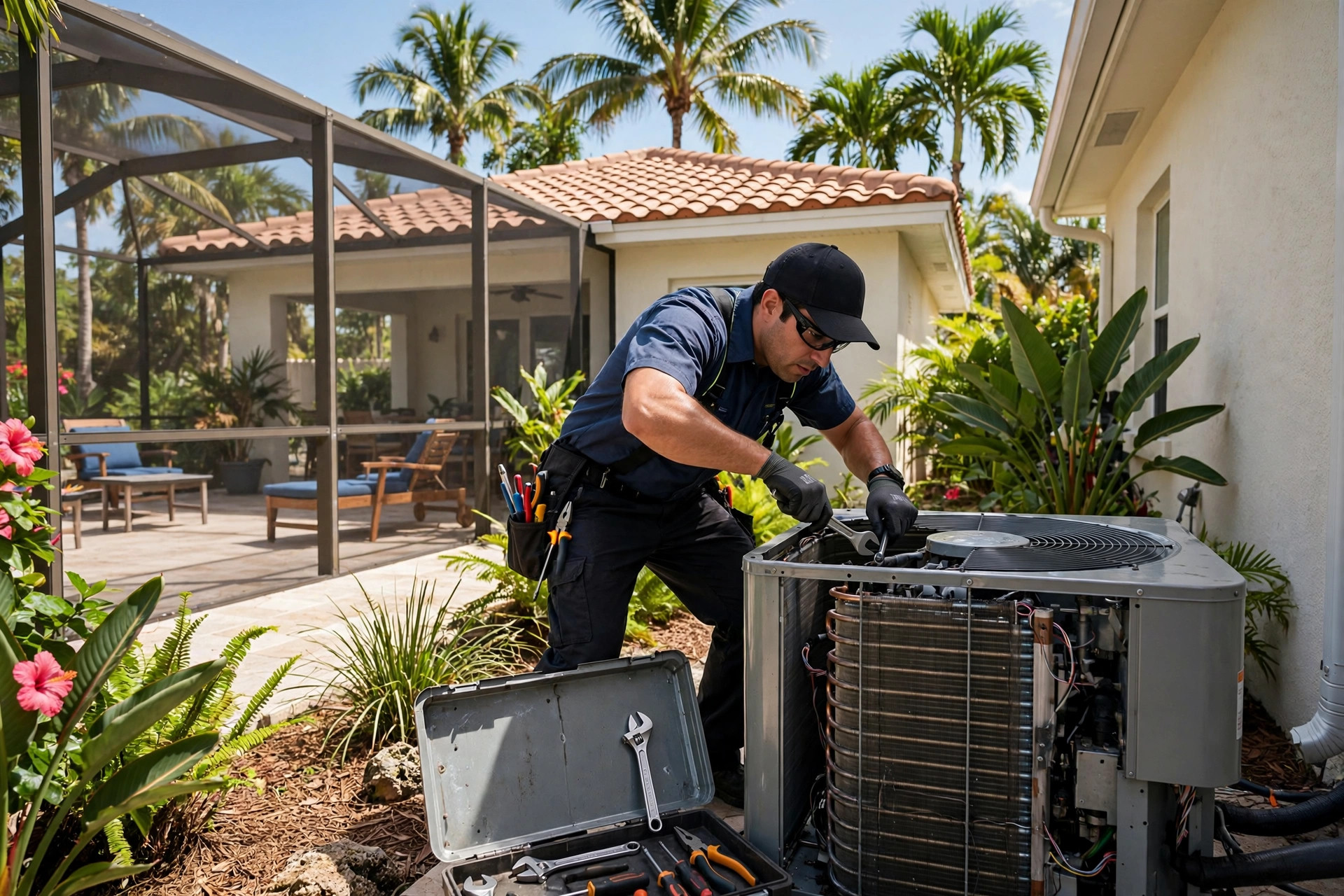
1. Check the thermostat. Confirm it is set to Cool and the target temperature is below the current room temperature. Replace the batteries — weak thermostat batteries are one of the most common reasons a system "suddenly" stops responding, especially in spring.
2. Reset the breaker — once. Head to the electrical panel and look for the breaker labeled for the air conditioner or air handler. If it has tripped, reset it one time and wait a few minutes. If it trips again, stop there and leave it off.
3. Replace the air filter. A clogged filter chokes airflow, which reduces cooling, spikes energy use, and can freeze the evaporator coil. If the coil is frozen, a fresh filter plus the fan switched to ON (with cooling off) lets the ice melt naturally. Never run the system while it is frozen — that can damage the compressor.
4. Check the outdoor disconnect. Beside the condenser there is a weatherproof box — the disconnect. Make sure the pull-out is seated or the lever is in the ON position. Yard crews and curious hands sometimes move these.
5. Clear debris around the condenser. Leaves, palm fronds, mulch, and grass clippings piled against the outdoor unit strangle airflow. Clear about two feet on all sides, but do not reach into the unit or bend the fins — the coil fins are thin aluminum and the electrical panel is live.
6. Wait out the compressor delay. Most systems have a built-in 3 to 5 minute delay that protects the compressor from short-cycling. After restoring power, give the system time before deciding it is dead.
If the system comes back and cools normally after these checks, book a maintenance visit to find out what stressed it. If anything on the emergency list above is present, skip the remaining checks and call.
What NOT to Touch (and Why It Is Dangerous)
The line between a safe check and a dangerous one runs right at the equipment panels. Do not open the indoor air handler or the outdoor condenser panels, do not touch capacitors, contactors, or wiring, and do not handle refrigerant lines.
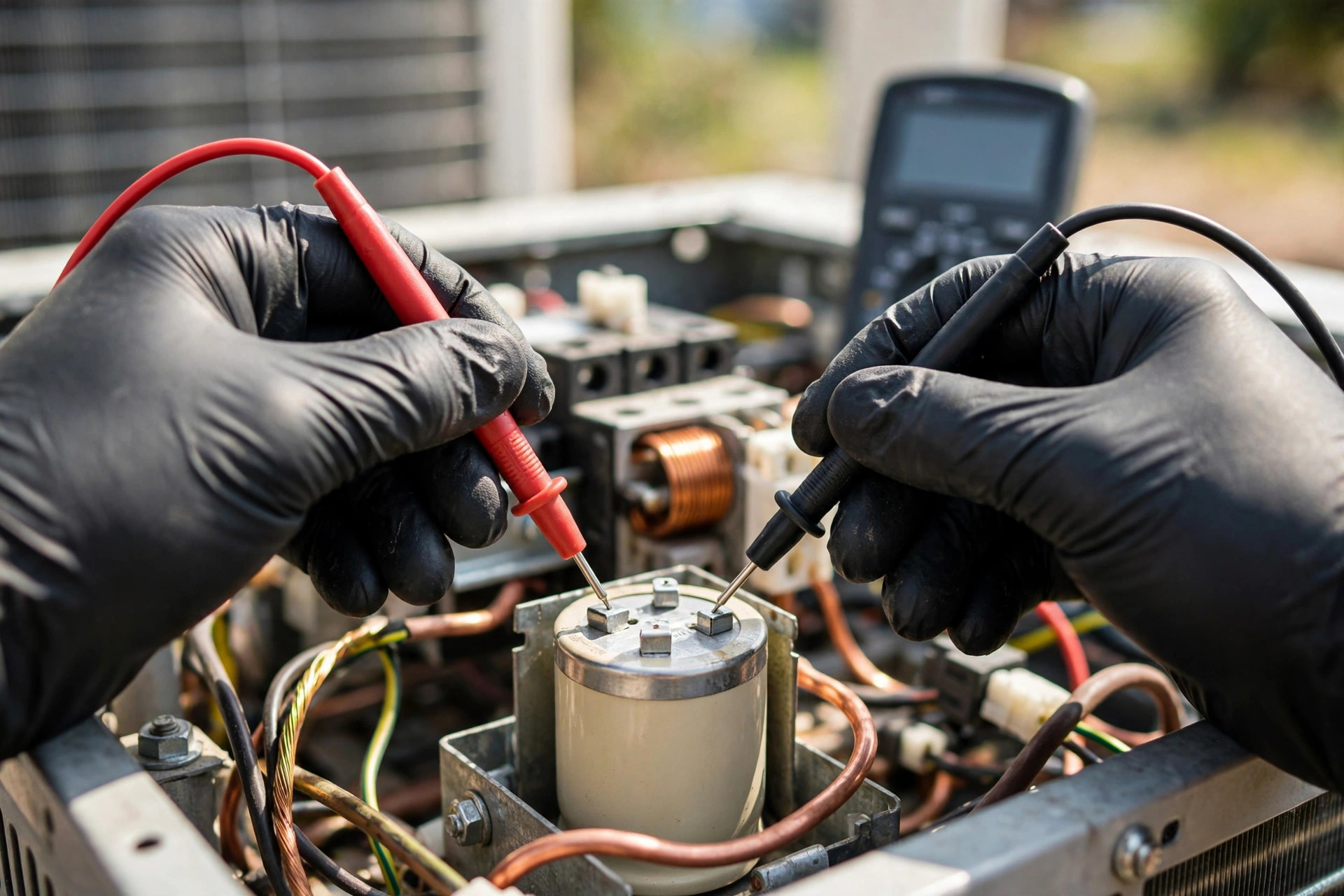
A run capacitor stores an electrical charge strong enough to cause a severe shock even with the power off — it can discharge into you if it is not handled with insulated tools and proper discharge procedure. Refrigerant is regulated, pressurized, and harmful to handle without training and gauges. Loose thermostat wires can be tightened gently, but anything inside a panel belongs to a licensed technician with a meter and the right PPE. Every source that covers emergency troubleshooting agrees on this point: reset the breaker once, change the filter, and stop there.
When Waiting Until Morning Is the Wrong Call
Marco Island adds three twists that make waiting riskier here than in most places.
Heat builds faster than you think. A Florida home with no cooling absorbs heat through the roof and windows all day. By late afternoon, indoor temperatures can be well past comfortable, and recovery takes hours even after the system is fixed — the structure itself has stored the heat.
Humidity feeds mold fast. Florida humidity means a dead AC is also a dead dehumidifier. Indoor humidity above 60 percent for extended periods invites mold growth on drywall, in closets, and inside ductwork — especially in seasonal homes that sit closed up. A drain pan already full from a clogged condensate line adds standing water to that picture.
Vulnerable people cannot wait. If anyone in the home is elderly, an infant, pregnant, or managing a condition that requires stable indoor temperatures, a cooling failure in Florida heat is a medical concern, not just a comfort one. Call.
That is what our 24/7 emergency AC repair exists for: situations where waiting has real costs for health, the home, or the system.
What an Emergency AC Technician Actually Does
When the technician arrives, expect a systematic process rather than a part swap. A good emergency visit looks like this:
Listen first, then test. You will be asked what happened — sounds, smells, what you saw, what you already tried. Those details narrow the diagnosis before a single panel comes off.
Measure, don't guess. The technician tests the capacitor under load, checks voltage and amperage draw on the compressor and motors, reads refrigerant pressures with gauges, and inspects the contactor, thermostat wiring, condensate drain, and airflow. HVAC professionals report that failed capacitors and contactors are among the most common emergency repairs — small parts, quick fixes, and the system is cooling again the same visit.
Explain before fixing. You should get a clear diagnosis in plain language: what failed, why it failed, what it costs, and what happens if you do nothing. If the fix is major — a compressor or a coil — a reputable tech will lay the repair quote next to a replacement option so you can decide with real numbers, the same math covered in our guide to AC repair vs replacement.
Test after the repair. A complete visit ends with the system running, pressures and temperatures verified, and airflow confirmed — not just a part replaced and a hope.
Emergency Repair Cost: What to Expect
Nobody likes surprise pricing at midnight, so here is how it works. An emergency or after-hours call typically carries a higher diagnostic or dispatch fee than a standard daytime visit — that covers priority dispatch outside normal hours. The repair itself (parts and labor) is generally priced the same as it would be during the day.
The real cost lever is how long you waited. A capacitor caught early is a minor part. A failing capacitor left running eventually burns out the compressor it is supposed to start, and a compressor replacement is one of the most expensive repairs in the system. A clogged drain caught early is a cleaning; left alone, it is water damage remediation. Calling at the first danger sign is almost always the cheaper path.
For the full breakdown of what common repairs run in our area, see our 2026 AC repair cost guide.
How to Avoid the Next 2 AM Breakdown
Emergency calls rarely come from nowhere. The system almost always gives warning signs first — strange noises, rising bills, weaker cooling, rooms that stopped feeling even — and a regular AC maintenance schedule catches them early. For Marco Island homes, three habits matter most:
- Change the filter on schedule. Monthly during the heavy cooling season. Coastal dust, pollen, and constant runtime clog filters faster here.
- Keep the condenser clean and clear. Salt air accelerates corrosion on condenser coils, contactors, and electrical connections. An annual professional coil wash and electrical inspection catches the corrosion before it becomes a breakdown.
- Do not ignore the small stuff. A breaker that trips "just once," a drain that gurgles, cooling that feels a little off — these are the early chapters of an emergency story. A tune-up costs far less than a midnight call.
And if the system is getting old — 10 to 12 years in coastal Florida is the realistic window — start planning rather than funding one emergency repair after another. Our AC replacement page walks through how sizing and SEER2 efficiency change the math.
Bottom Line
Do the six safe checks first — thermostat, breaker once, filter, disconnect, clear debris, wait out the delay. If you find burning smells, smoke, repeated breaker trips, water near electrical parts, hissing or ice, or a complete failure in extreme heat, stop troubleshooting and call for emergency AC repair. Waiting has real costs here: heat illness risk, mold from runaway humidity, water damage, and a small part failure cascading into a compressor replacement. When the danger signs are present, calling early is the cheapest and safest move you can make.