The Short Answer: What AC Repair Costs in 2026
If your AC just quit and you want the number first: most air conditioner repairs in 2026 cost between $150 and $650, and the national average lands around $350 to $375, per current pricing data from Angi, Thumbtack, and HVAC cost guides. Minor fixes like a capacitor or contactor replacement sit near the bottom of that range; major component failures — a compressor, evaporator coil, or serious refrigerant leak — can run $1,000 to $2,800 or more.
But "average" hides the details that matter to your wallet. The failed part is the biggest cost driver, followed by labor rates in your area, whether it's an emergency call, and what refrigerant your system uses. This guide breaks down every price that matters so you can judge any quote you receive with confidence.
AC Repair Cost by Problem Type
Different failures have very different price tags. Here are the current 2026 ranges, combining national data with South Florida-specific figures:
- Diagnostic / service call: $75–$150. This covers the visit and testing. Many companies credit it toward the repair if you proceed — always ask.
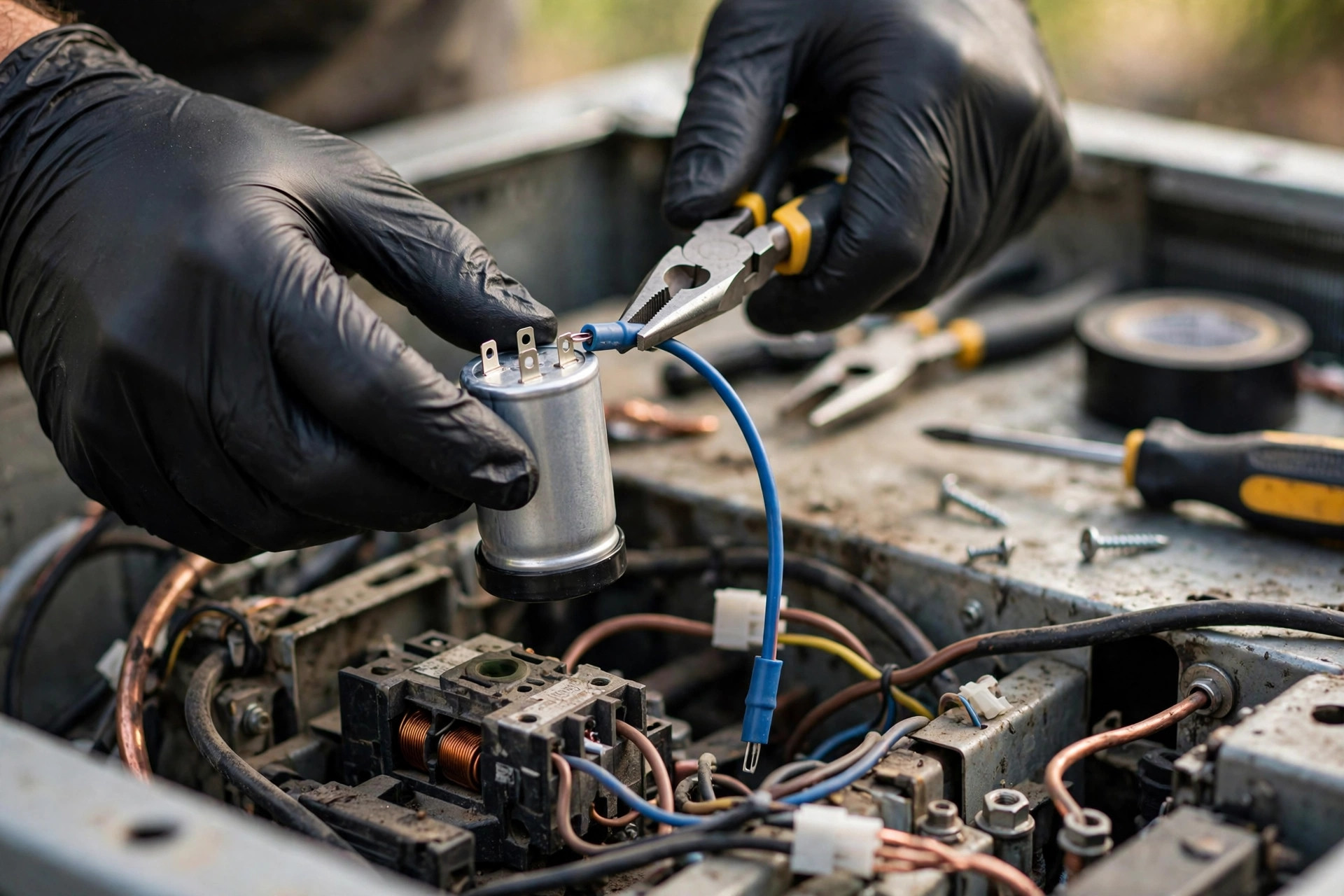
- Capacitor replacement: $150–$300. The most common single-component AC repair, an estimated 25–30% of service calls. The part itself costs under $30; you're paying for the diagnosis and safe installation.
- Contactor or relay replacement: $150–$250. Often fails alongside the capacitor from the same heat and corrosion stress.
- Thermostat replacement: $150–$400, with smart thermostats at the higher end.
- Condensate drain clearing: $75–$200. In Florida's humidity, algae clogs drain lines fast — one of the most common (and cheapest) Marco Island calls.
- Coil cleaning (evaporator or condenser): $100–$400. Dirty coils can't transfer heat, so the system runs longer and cools less.
- Refrigerant recharge (R-410A): $150–$400. A low charge always means a leak — a reputable tech finds and fixes the leak instead of just topping off.
- Refrigerant recharge (R-22): $400–$1,200. R-22 production was phased out years ago, so remaining supplies get pricier every year.
- Fan or blower motor replacement: $300–$700. Outdoor fan motors in coastal areas fail faster from salt and heat.
- Evaporator coil replacement: $700–$2,200. Labor-intensive to reach, and the part itself is expensive.
- Compressor replacement: $1,200–$2,800 nationally, up to $3,000 in South Florida. The most expensive common repair — and the one that most often triggers the repair-vs-replace decision below.
For context, a full system replacement runs $3,500 to $8,000 depending on size, efficiency (SEER2 rating), and installation complexity. That's the number to keep in your head when a repair quote starts climbing.
What Drives Your Final Bill
Two neighbors with the same failed part can pay different amounts. Here's why:
Labor rates. HVAC labor typically runs $75 to $150 per hour nationally, and most repairs take 1 to 3 hours on-site. Labor is the largest variable — and coastal Florida markets tend to sit above the national middle.
The diagnostic fee. Every reputable company charges one: $75 to $150 for the visit and testing, earned whether or not you proceed. It's also why you should never approve "repair" work before a real diagnostic — guessing wastes your money twice.
System type. Central air, ductless mini-splits, and heat pumps all cost more to repair than window or portable units, because of complexity and part pricing. A heat pump repair or ductless mini-split service involves specialized components that cost more than standard central-AC parts.
Timing. AC failures love heat waves, weekends, and holidays. Emergency and after-hours service typically adds $75 to $200, and some companies charge 1.5 to 2 times standard rates. The same $200 capacitor job on a Tuesday in April can cost $400-plus on a Saturday in July.
Refrigerant type. Systems using R-410A (standard since 2010) cost far less to service than older R-22 units. If you don't know which you have, it's printed on the outdoor unit's nameplate.
Accessibility. Units buried behind overgrown landscaping or crammed into tight spaces take longer to service — and labor is billed by time. Clear access to your air handler and outdoor condenser before the tech arrives.
Marco Island Factors That Change the Math
National averages get you in the ballpark, but Marco Island isn't the national average. Local conditions shape both what fails and what it costs:
Salt air eats equipment. Coastal units corrode faster — contactors, capacitors, condenser coils, and electrical connections all degrade quicker near the Gulf. Industry data from South Florida contractors suggests salt exposure can shorten equipment life by 3 to 5 years. A condenser coil that might last 15 years inland can fail at 10 to 12 here, and repairs arrive sooner than the national lifespan charts suggest.
The AC runs 8 to 10 months a year. Northern systems get a real off-season; yours doesn't. That extra runtime means more wear on every moving part — compressors, fan motors, contactors — and more frequent maintenance to keep efficiency from sliding.
Humidity punishes drainage. Algae-choked condensate drains are among the most common Marco Island service calls. The fix is cheap ($75–$200), but an ignored clog trips the float switch and can overflow the drain pan into ceilings and walls. A rusted-out pan replacement runs $250–$650.
Seasonal and rental homes sit idle. Vacant houses breed signature problems: algae in the drain line, corroded contactor points, pest nests in the electrical panel, even refrigerant leaks that go unnoticed for months. If the house was empty through the summer, expect the diagnostic to take a little longer.
Hurricane exposure. Outdoor units face wind, flooding, and debris impact — and after a major storm, demand surges and parts can be backordered. Another reason to keep the system healthy before season starts.
The practical takeaway: budget a little above national averages for repairs here, and treat annual maintenance as mandatory rather than optional. The most expensive repair is the one a spring tune-up would have prevented.
Repair or Replace: The 50% Rule
Every big repair quote forces the same question — and there's a well-tested rule for it. If a repair costs more than 50% of a new system, or you've had multiple repairs in the past year, replacement is usually the better investment.
A $1,500 compressor replacement on a 7-year-old unit under partial warranty? Repair usually wins. The same $1,500 quote on a 14-year-old unit with an R-22 system? Almost never worth it. You're paying half the price of a new system for a fix that leaves you with aging coils, an inefficient blower, and a refrigerant that's only getting more expensive.
Also factor in operating costs. A 15-year-old system likely runs at SEER 10 to 13; modern systems reach SEER2 ratings of 14 to 20-plus. In a climate where the AC runs most of the year, that gap shows up on every power bill.
When a technician recommends replacement over repair, ask these three questions: What's the repair cost versus the replacement quote? How old is my system, and what's its SEER rating? And is the failed part under manufacturer warranty? Honest answers make the decision easy. You can compare both paths on our AC replacement and AC installation pages.
How to Keep Your AC Repair Bill Down
You can't control the part price, but you can control almost everything else:
- Don't wait. Small symptoms — longer run times, warm spots, new noises — are cheaper to fix than full breakdowns. A spring tune-up ($75–$200) catches failing capacitors and low refrigerant before they kill a compressor.
- Change the filter. A clogged filter chokes airflow and can freeze the evaporator coil solid. Check it monthly in summer.
- Get the diagnostic in writing. Every quote should list parts and labor separately, before any work beyond the diagnostic.
- Ask about the service-call credit. Most companies apply the diagnostic fee toward the repair — but not all. Ask when you book.
- Schedule in the off-season. Non-urgent work booked in spring or fall can save 10 to 20 percent versus peak-summer pricing.
- Compare one apples-to-apples quote. A second opinion is reasonable for any quote over $1,000, but compare the same scope: same part quality, same warranty, same labor hours.
And when it can't wait — middle of the night, 90 degrees inside — know that emergency AC repair is available around the clock. You'll pay the emergency surcharge, but a fast response protects far more than comfort: extreme indoor heat damages electronics, flooring, and in some cases the home's structure.
The bottom line: budget roughly $150 to $650 for most 2026 AC repairs, expect about $375 on average nationally, and add a Florida-coast margin for salt air and year-round runtime. Get every quote in writing, fix small problems before they become big ones, and apply the 50% rule whenever a major component fails.