- The Quick Answer: Repair vs Replace
- The Two Rules Every Homeowner Should Run
- Age Matters More in Florida Than Almost Anywhere Else
- Clear Signs Replacement Is the Better Investment
- Clear Signs a Repair Is Still the Right Call
- Marco Island Factors That Tip the Decision
- What a New System Actually Gives You
- Your Decision Checklist Before You Sign Anything
The Quick Answer: Repair vs Replace
If you need the decision fast: repair when the system is under 10 years old and the fault is small and isolated; replace when the system is 10 to 12 years or older, the repair is expensive, or you have already paid for repairs recently. That single sentence covers most Marco Island homes.
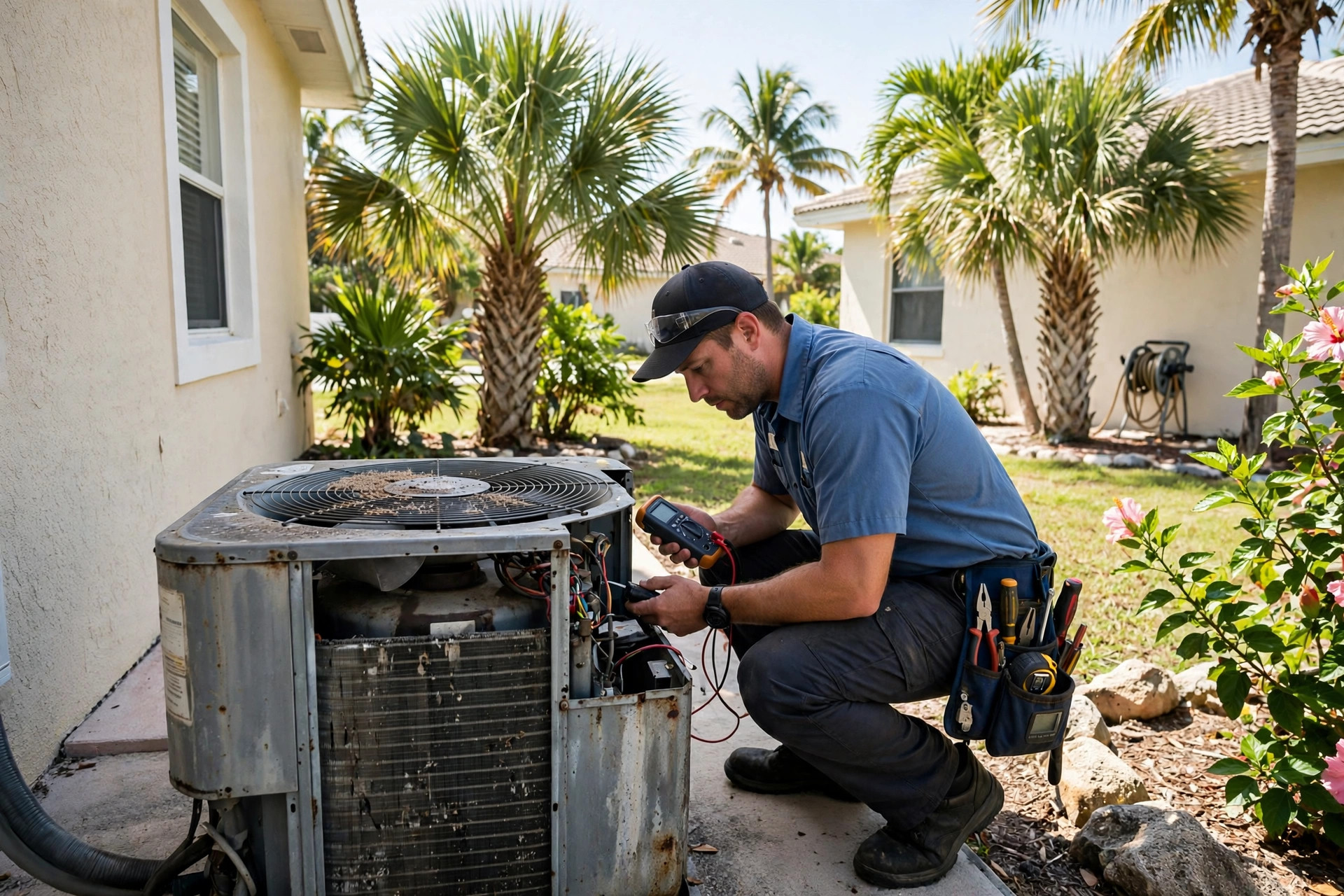
The harder cases sit in the middle — an 11-year-old system with a mid-priced repair, for example. That is exactly what the two industry rules below are for. Run both, look at the condition of the evaporator coil, condenser coil, compressor, and air handler, and the answer usually becomes obvious. A good technician should walk you through the same math on paper, with a repair quote and a replacement quote side by side, before you commit to either path through HVAC repair or AC replacement.
The Two Rules Every Homeowner Should Run
You do not need to guess, and you do not need to rely on a sales pitch. Two long-used rules of thumb turn the repair quote and the system's age into a clear signal.
The $5,000 rule. Multiply the system's age in years by the cost of the repair. If the total is over $5,000, replacement is usually the smarter financial move. A 6-year-old system needing a $600 repair scores 3,600 — repair it. A 12-year-old system needing the same $600 repair scores 7,200 — start planning replacement. The logic is simple: the older the system, the less life a repair actually buys you.
The 50% rule. If a single repair costs more than half the price of a new system, replace instead. A compressor replacement that lands at 30 to 50 percent of a new system's cost is the classic borderline case, and on an older unit it almost always tips toward replacement, because you are paying new-system money for a system that still has old coils, an old blower, and old controls.
Use the rules together. If both point the same way, trust them. If they disagree, the tie-breakers are repair history, refrigerant type, and how well the home actually cools — covered next.
Age Matters More in Florida Than Almost Anywhere Else
National guidance, including ENERGY STAR's, flags air conditioners older than 10 years as replacement candidates. Most central systems last 10 to 15 years in Florida, and Marco Island pushes systems toward the shorter end of that range for three reasons.
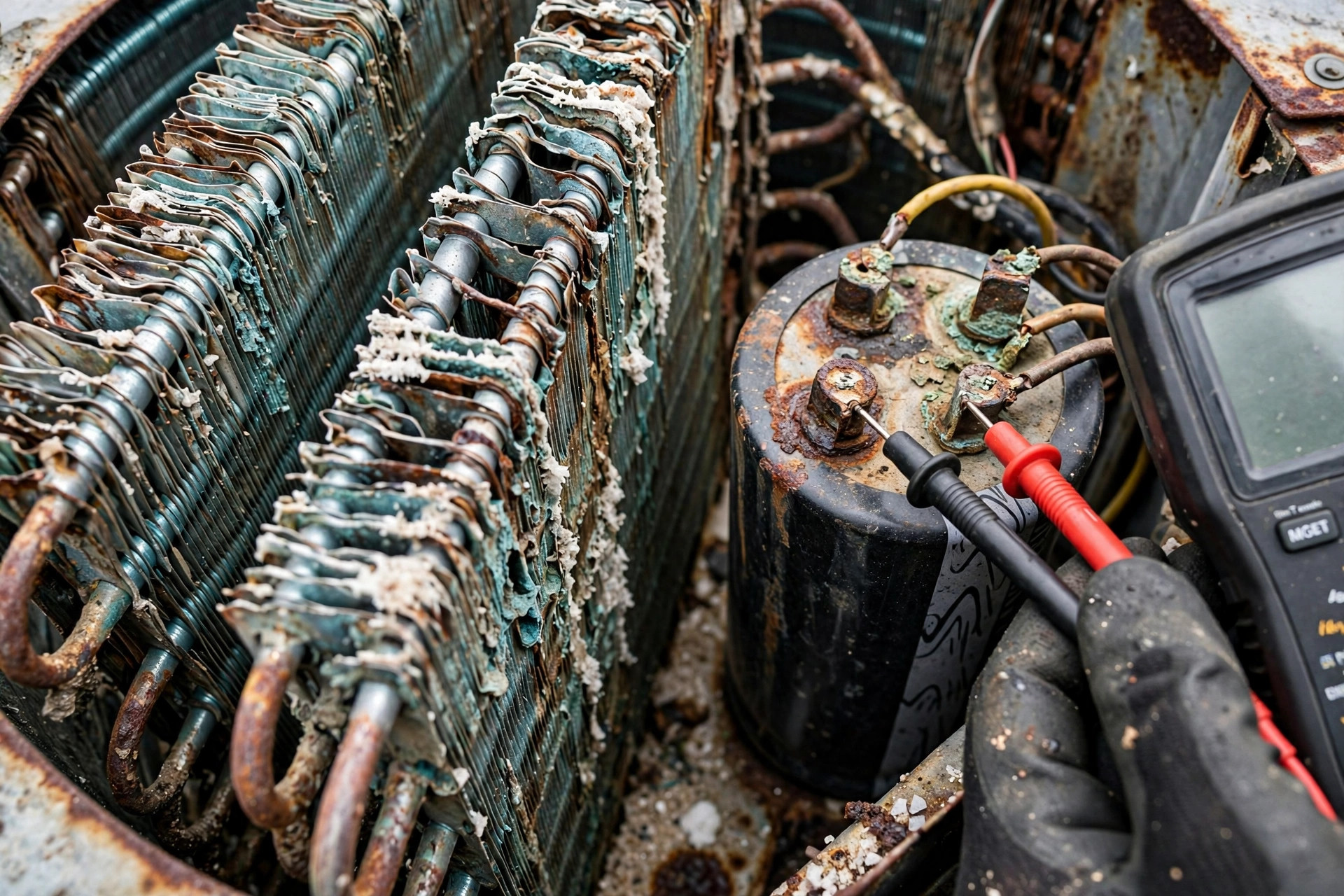
First, runtime. Your AC does not get a real off-season here — it cools 8 to 10 months a year, so the compressor, fan motors, capacitor, and contactor accumulate wear far faster than the same parts would up north. Second, humidity. The system has to remove moisture as well as heat, which keeps the evaporator coil wet, stresses the condensate drain, and punishes any weakness in airflow or ductwork. Third, salt air. Coastal corrosion eats condenser coils, electrical connections, and cabinet metal. A unit that looks fine from the driveway can have coil fins crumbling inside.
So read age on a Florida scale: 0 to 7 years, repair almost always makes sense; 8 to 10 years, evaluate carefully with both rules; 11 to 15 years, lean toward replacement for any major repair; over 15 years, plan replacement rather than funding another big fix.
Clear Signs Replacement Is the Better Investment
Replacement wins when several of these are true at once:
- The compressor or evaporator coil has failed. These are the most expensive components in the system. Replacing one on an older unit leaves every other aging part in place.
- Repairs are stacking up. Two or more service calls in the past year, or repeated refrigerant leaks, is a pattern — not bad luck.
- The system uses R-22 refrigerant. R-22 production ended in 2020, so recharging an older system costs more every year. A leak repair plus an R-22 recharge on an old unit is rarely money well spent.
- Energy bills keep climbing even though your usage has not changed. A tired compressor and fouled coils force longer run times to hold the same thermostat setting.
- The home no longer feels right. Hot rooms, weak airflow, or air that feels clammy after the system runs point to lost capacity or an oversized, short-cycling system — problems a part swap does not fix.
- The warranty has expired and the next repair is entirely out of pocket, with no coverage on the parts most likely to fail next.
When replacement is the call, sizing matters as much as brand. A correct load calculation, sealed ductwork, and a properly charged system are what deliver the efficiency on the label. You can see what that process looks like on our AC installation page.
Clear Signs a Repair Is Still the Right Call
Replacement is not always the answer, and an honest guide has to say so plainly. Repair is usually right when:
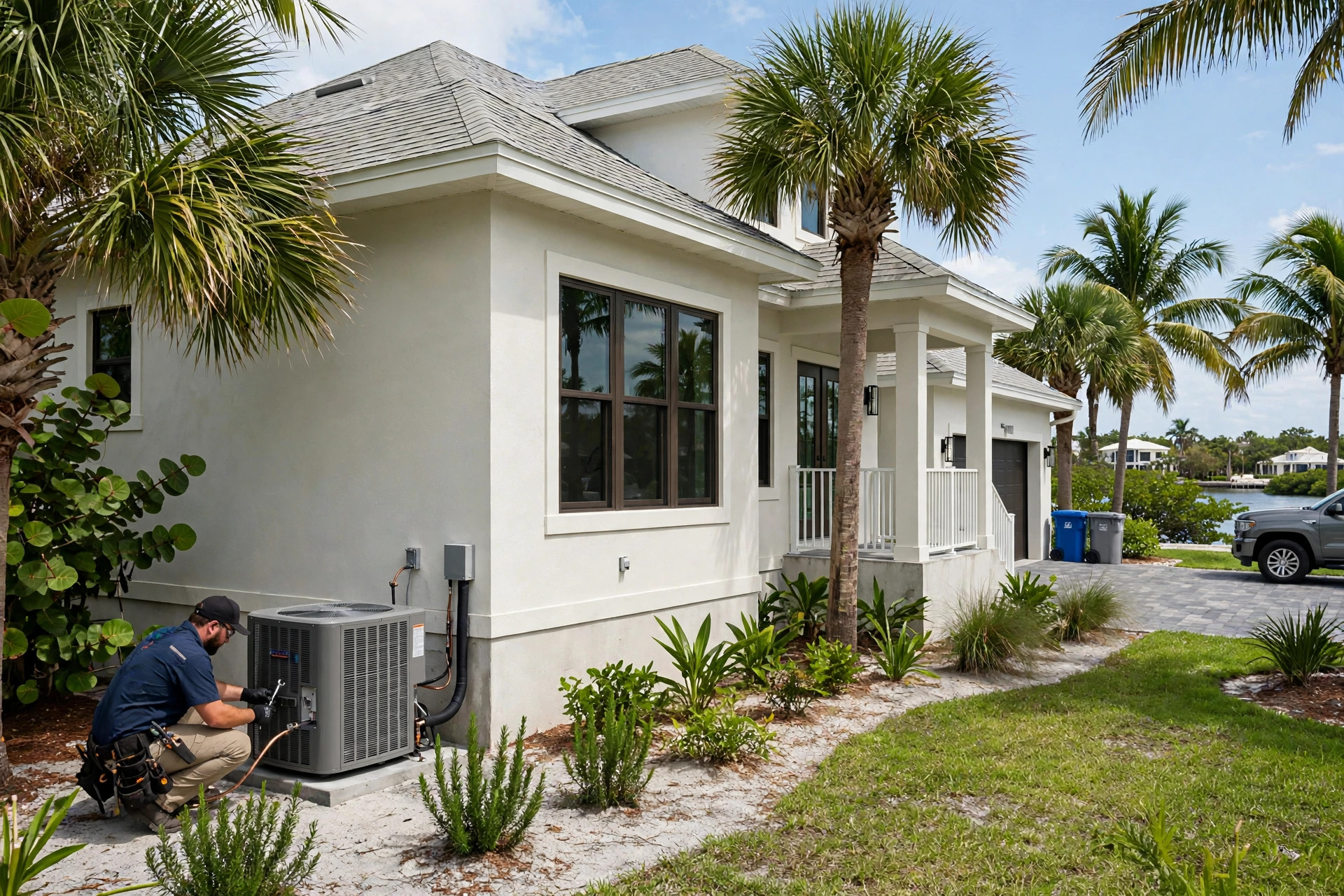
- The system is under 8 to 10 years old and has been maintained. A failed capacitor, contactor, or thermostat on a young system is a normal wear item, not a death sentence.
- The fault is minor and isolated — a clogged condensate drain, a worn capacitor, a faulty thermostat, a single electrical connection. These are typically a few hundred dollars and restore full performance.
- The failed part is under warranty. If the manufacturer covers the compressor or coil, repairing can add years of service at a fraction of replacement cost.
- Cooling performance was good before this breakdown. If the home cooled evenly, humidity felt controlled, and bills were stable, the system was doing its job — fix the fault and keep it on a maintenance schedule.
- You plan to sell soon and the system passes inspection after the repair. Disclose the work, keep the invoice, and let the new owner plan the eventual replacement.
The key question is never just "can it be fixed?" Almost anything can be fixed. The question is whether the repair buys you reliable, efficient years — or just postpones a replacement by one hot season.
Marco Island Factors That Tip the Decision
Two Marco Island specifics change the math compared with inland advice. The first is seasonal occupancy. Many homes here sit empty for months. An idle system hides problems: algae grows in the condensate drain line, contactor points corrode, and a slow refrigerant leak can empty the charge before anyone notices. If a seasonal home needs a major repair after sitting vacant, get a full system health report first — the failed part may not be the only problem, and that changes the repair case.
The second is storm and flood exposure. Outdoor units that have taken standing water, debris impact, or a lightning-related power surge often carry hidden electrical damage beyond the visible fault. After a storm, a careful diagnostic of the air handler, control board, and outdoor unit is worth more than a fast part swap.
If the system fails completely in peak heat while you are deciding, emergency AC repair can stabilize the home first. And if your home uses a heat pump or ductless mini-splits for part of the house, the same age-and-cost rules apply zone by zone — sometimes replacing one failing zone is smarter than replacing everything at once.
What a New System Actually Gives You
A replacement is not just a new box outside. A modern system brings a higher SEER2 rating, which means less electricity for the same cooling — meaningful when the AC runs most of the year. It brings a full manufacturer warranty instead of lapsed coverage, a current refrigerant that is cheaper and easier to service, and better humidity control because variable-speed and two-stage equipment runs longer, gentler cycles that pull more moisture from the air.
It also resets the clock on the parts that fail most expensively. New condenser and evaporator coils, a new compressor, and a clean, correctly sized air handler remove the "what breaks next?" risk that hangs over every repair on a 13-year-old system. For many homeowners, that predictability — not just the energy savings — is what finally justifies the investment.
Your Decision Checklist Before You Sign Anything
Before approving either a large repair or a replacement, make sure you can answer these five questions:
- How old is my system, and what refrigerant does it use? Check the outdoor unit's nameplate.
- What is the repair quote, itemized for parts and labor, and what does the $5,000 rule say?
- What is the full replacement quote, and is the repair more than 50% of it?
- How many repairs have I paid for in the last two years, and is the failed part under warranty?
- Has the technician checked the coils, airflow, ductwork, and condensate drain — or only the one failed part?
Ask for both quotes in writing. A company confident in its recommendation will happily show you the repair price and the replacement price together, explain the SEER2 difference, and let you decide without pressure. That is how we handle the call at Marco Island AC Services — diagnose first, show the math, and let the numbers make the decision.
The bottom line: run the $5,000 rule and the 50% rule, weigh the system's age on a Florida scale, and count your recent repairs. If two of those three point to replacement, believe them. If they point to repair, fix it properly and protect the system with regular maintenance.