- The Short Answer: Three Labels, Not Three Equal Choices
- What Split Actually Means
- Central (Ducted) AC: How It Works
- Ductless Mini-Splits: The Other Kind of Split
- What Inverter Really Means
- Efficiency and Humidity in Marco Island's Climate
- Cost, Installation, and Maintenance Compared
- Which System Fits Which Marco Island Home?
- The Bottom Line for Marco Island Homeowners
The Short Answer: Three Labels, Not Three Equal Choices
Search results for the difference between split AC and central AC, or between split and inverter AC, usually present a head-to-head contest. That framing hides a problem: these three terms do not describe three rival systems. They describe different things about the same machine.
Split describes the layout: the system is split into an indoor unit and an outdoor unit. Central describes how cooled air reaches your rooms: through ductwork, from one indoor air handler. Inverter describes how the compressor works: it varies its speed instead of switching fully on or fully off.
So a central air conditioner is almost always a split system, and a mini-split is also a split system. An inverter system can be either central or ductless. The real question is therefore two smaller questions: do you want ducted or ductless delivery, and do you want fixed-speed or variable-speed (inverter) operation? Answer those for your Marco Island home, and the right system usually picks itself.
What Split Actually Means
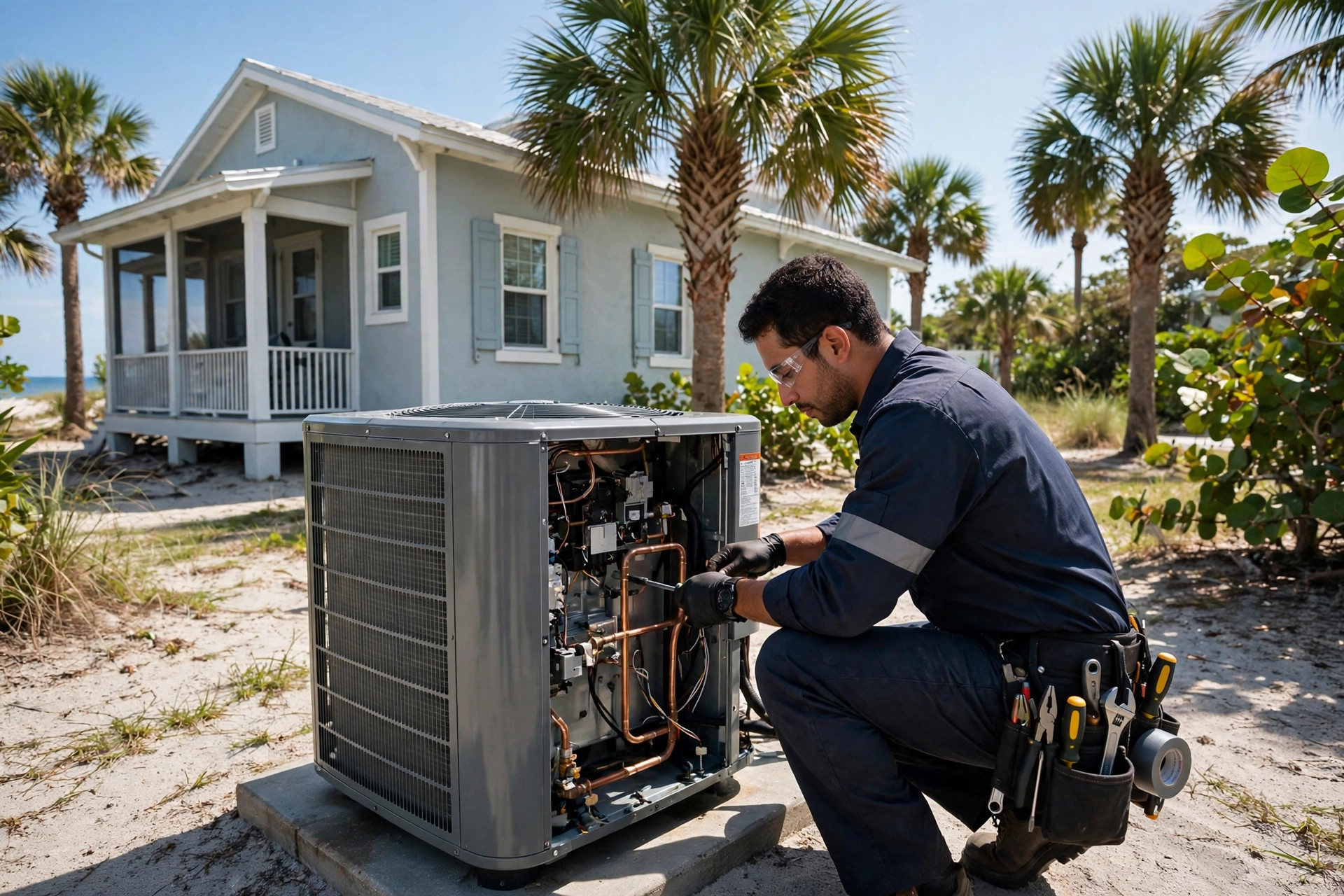
A split air conditioner has two main parts connected by refrigerant lines. The outdoor unit, the condenser, holds the compressor and the condenser coil and releases heat outside. The indoor unit holds the evaporator coil and a fan and delivers cooled air inside. Refrigerant carries heat from indoors to outdoors, and the cycle repeats.
This layout is the standard for nearly every whole-home and room system sold in Florida today. It keeps the noisy compressor outside, which is why split systems run quieter indoors than a window unit. When someone says split AC, they usually mean one of two things: a ductless mini-split with a wall-mounted indoor unit, or a central split system with an air handler hidden in a closet, attic, or garage. The word alone does not tell you which one, so always ask which kind of split a quote is describing.
Central (Ducted) AC: How It Works
A central system is a split system whose indoor air handler feeds a network of ducts. Cooled air travels through supply ducts to vents in every connected room, and return ducts bring warm air back. One thermostat usually controls the whole home, though zoning dampers can divide it into areas with separate controls.
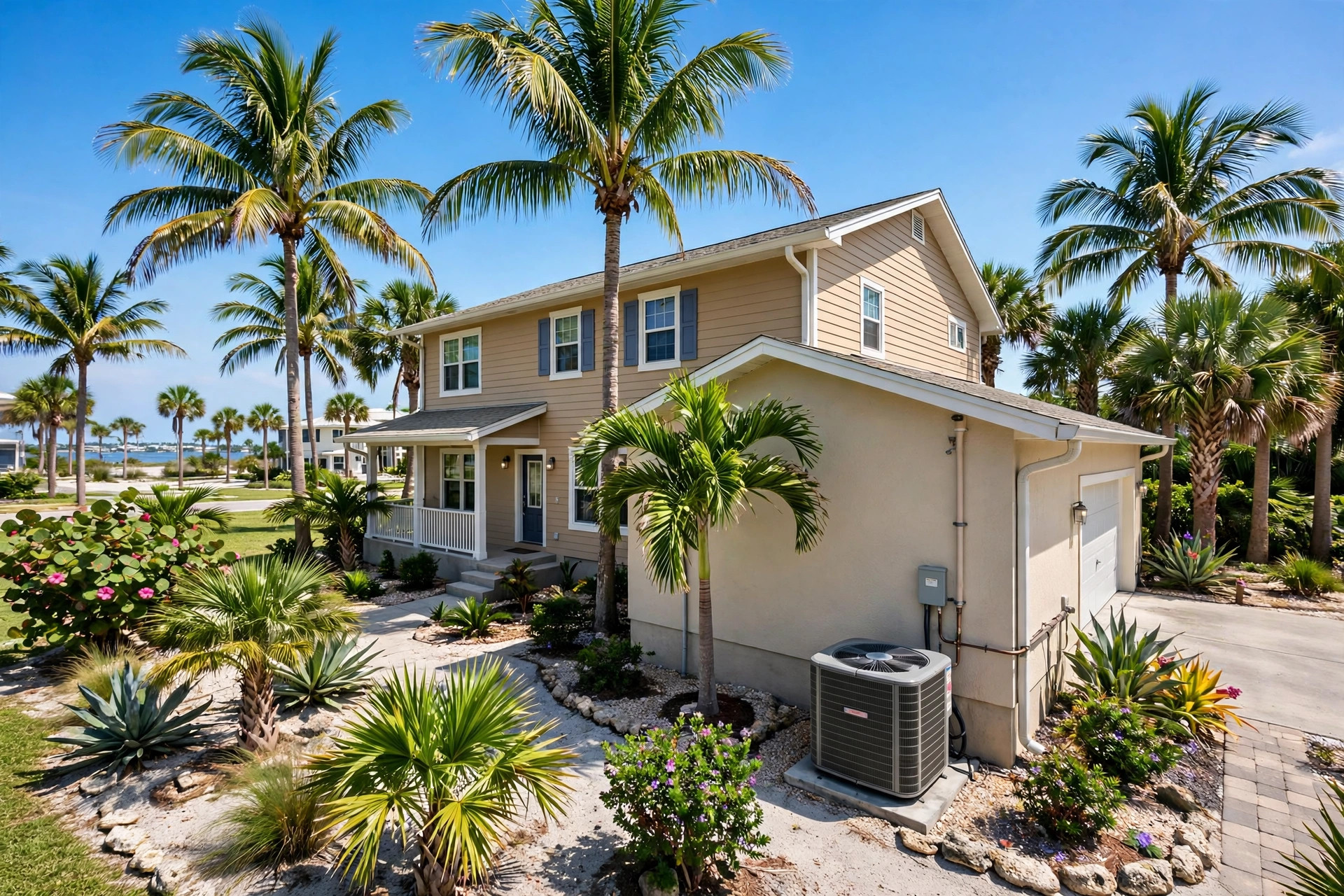
Central AC suits homes that already have ductwork in good condition and rooms that are used throughout the day. It keeps equipment mostly out of sight, delivers even temperatures, and filters all circulated air through one filter location. Its weakness is the ductwork itself. Industry guides commonly note that leaky or poorly insulated ducts, especially in a hot attic, can waste a large share of cooling energy, with losses of up to 20 to 30 percent often cited. In Marco Island, where attics get extremely hot and salt air corrodes metal over time, duct condition deserves a real inspection before you commit to a central system.
Ductless Mini-Splits: The Other Kind of Split
A ductless mini-split is also a split system, but there is no duct network. Each indoor air handler, usually wall-mounted, cools the room or zone it serves directly. One outdoor unit can serve a single indoor unit or several, in a multi-zone setup where each room gets its own temperature setting.
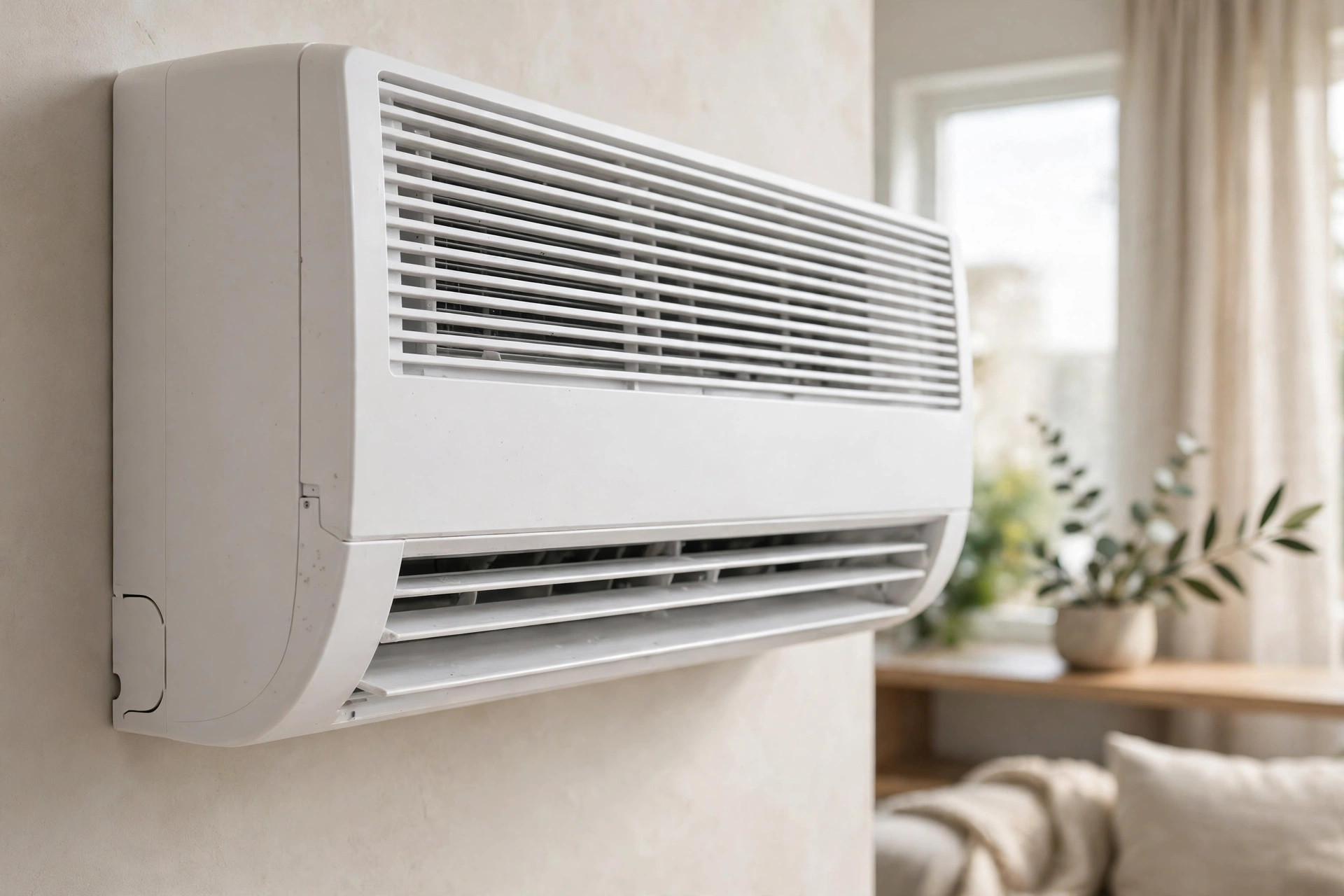
Mini-splits shine where central systems struggle: homes with no ductwork, additions and converted spaces, lanais and sunrooms, condos where ductwork is impractical, and rooms that are always too hot or too cold for the rest of the house. Installation is far less invasive, needing only a small opening for the lines, power, and condensate drain rather than opening walls and ceilings for ducts. Because each zone runs independently, you cool only the rooms you are using, a real advantage in a seasonal Marco Island home that may sit partly empty for months.
There are trade-offs. The indoor units are visible on the wall, each one needs its own filter cleaning, and cooling a large home entirely with mini-splits means buying and maintaining many indoor units, which can cost more overall than one central system with good ducts.
What Inverter Really Means
Inverter is the most misunderstood of the three terms, because it sounds like a system type and it is not. It is a compressor technology, and it can appear in central systems, mini-splits, and heat pumps alike.
A conventional fixed-speed compressor has two states: on at full power, or off. It cools the house, shuts down, waits for the temperature to rise, then starts again at full power, with temperature swinging up and down between cycles. An inverter compressor varies its speed continuously, running faster when demand is high and slowing to a gentle pace to maintain temperature. That brings steadier temperatures, better humidity control because longer, slower runs pull more moisture from the air, and quieter operation with often lower running costs. Inverter systems cost more upfront, so the question is whether the comfort and humidity benefit justifies the premium for your home. In a humid coastal climate with a long cooling season, it often does.
Efficiency and Humidity in Marco Island's Climate
Marco Island is a hard test for any cooling system: a long, hot cooling season, high humidity for much of the year, salt air that corrodes outdoor coils and connections, and many seasonal homes that sit closed up for months. The rating you will see on new equipment is SEER2, the seasonal energy efficiency ratio under current test conditions. Under current federal standards, new split-system air conditioners in Florida must meet a minimum of 14.3 SEER2, and Southwest Florida guides commonly suggest 16 to 18 SEER2 as a sensible sweet spot, though a seasonal home used a few months a year gains less from a top-rated system than a year-round family home.
Two warnings matter more than the headline rating. First, sizing: an oversized system cools the air quickly and shuts off before it has removed enough humidity, leaving a home that feels cool but clammy. Proper sizing starts with a Manual J load calculation, accounting for square footage, insulation, windows, and sun exposure, not just matching the old unit's tonnage. Second, salt air: ask about coastal protection, such as coated coils and corrosion-resistant hardware. Regular AC maintenance, including coil washing and drain clearing, protects both efficiency and lifespan in this climate.
Cost, Installation, and Maintenance Compared
Installed cost depends far more on your home than on the equipment brand, so treat any price quoted without a site visit with suspicion. The factors that move the number are ductwork (new ducts are the biggest single cost driver for a central system), the number of zones (each mini-split indoor unit adds cost), electrical capacity and panel work, and access for the outdoor unit and line routing. As a rough guide to the shape of costs, not a quote: a central system is usually the most economical whole-home option when good ductwork already exists; a single-zone mini-split is often the most economical fix for one problem room, with a job that typically takes a day or less; and a multi-zone mini-split system for a whole house, or a central system plus new ductwork, are both larger projects needing itemized quotes to compare fairly. Disruption follows the same pattern, with mini-split installation the least disruptive and new ductwork the most.
Maintenance is similar across all three approaches at its core: clean filters, clean evaporator and condenser coils, a clear condensate drain, and periodic electrical checks of the capacitor, contactor, and connections. Salt air makes the outdoor coil and electrical components wear faster in Marco Island than inland. The differences are in the count and the ducts: a central system has one filter location but adds duct inspection to the list, while a mini-split multiplies filter work by the number of indoor units. Inverter systems add one more consideration: their control boards and variable-speed components are more sophisticated, so diagnostics and parts can cost more when something does fail, which is one more reason to keep up with maintenance.
Which System Fits Which Marco Island Home?
Match the system to the home, not to a marketing label:
- Single-family home with good existing ductwork, most rooms used daily: a central split system, ideally with inverter or variable-speed operation for humidity control. This is the classic Marco Island family home answer.
- Home with no ductwork, or ducts in poor condition: a ductless mini-split system, zoned room by room. Avoid paying for a whole new duct network unless a renovation makes it cheap to add.
- Addition, lanai, sunroom, converted garage, or one chronically hot room: a single-zone mini-split, even if the rest of the house runs on central AC. This is the most common and most cost-effective fix for a single problem space.
- Condo or high-rise unit: a mini-split or a compact ducted system, depending on the building's rules, outdoor space, and what the association allows on balconies and exterior walls. Check the rules before choosing equipment.
- Seasonal home, empty for months at a time: zoning matters more than raw capacity. Mini-splits let you cool only the rooms in use on arrival, and a variable-speed system holds humidity down while you are away, protecting furnishings from moisture damage.
- Older home with a failing central system and failing ducts: price both paths honestly, a central AC replacement with duct repairs against a multi-zone mini-split system, and compare the itemized totals rather than the equipment prices alone.
The Bottom Line for Marco Island Homeowners
The difference between AC and split is not a choice between two machines. Split is the layout, central is the delivery method, and inverter is the compressor technology, and a good system combines them deliberately for your home. For most Marco Island homes with sound ductwork, a central split system with variable-speed operation is the comfortable, efficient default. For homes without ducts, for additions and lanais, and for rooms the central system never served well, a ductless mini-split is the smarter tool. And wherever humidity and steady comfort matter, which in coastal Florida is everywhere, inverter technology is worth pricing seriously.
If you are unsure which combination fits your home, start with the facts a quote should be built on: duct condition, room-by-room usage, a proper load calculation, and the SEER2 rating and compressor type behind the price. Our technicians measure those things before recommending a system, and they explain the trade-offs in writing. Call Marco Island AC Services at (239) 880-1889, or explore our AC installation and ductless mini-split services to see what each option would involve for your home.