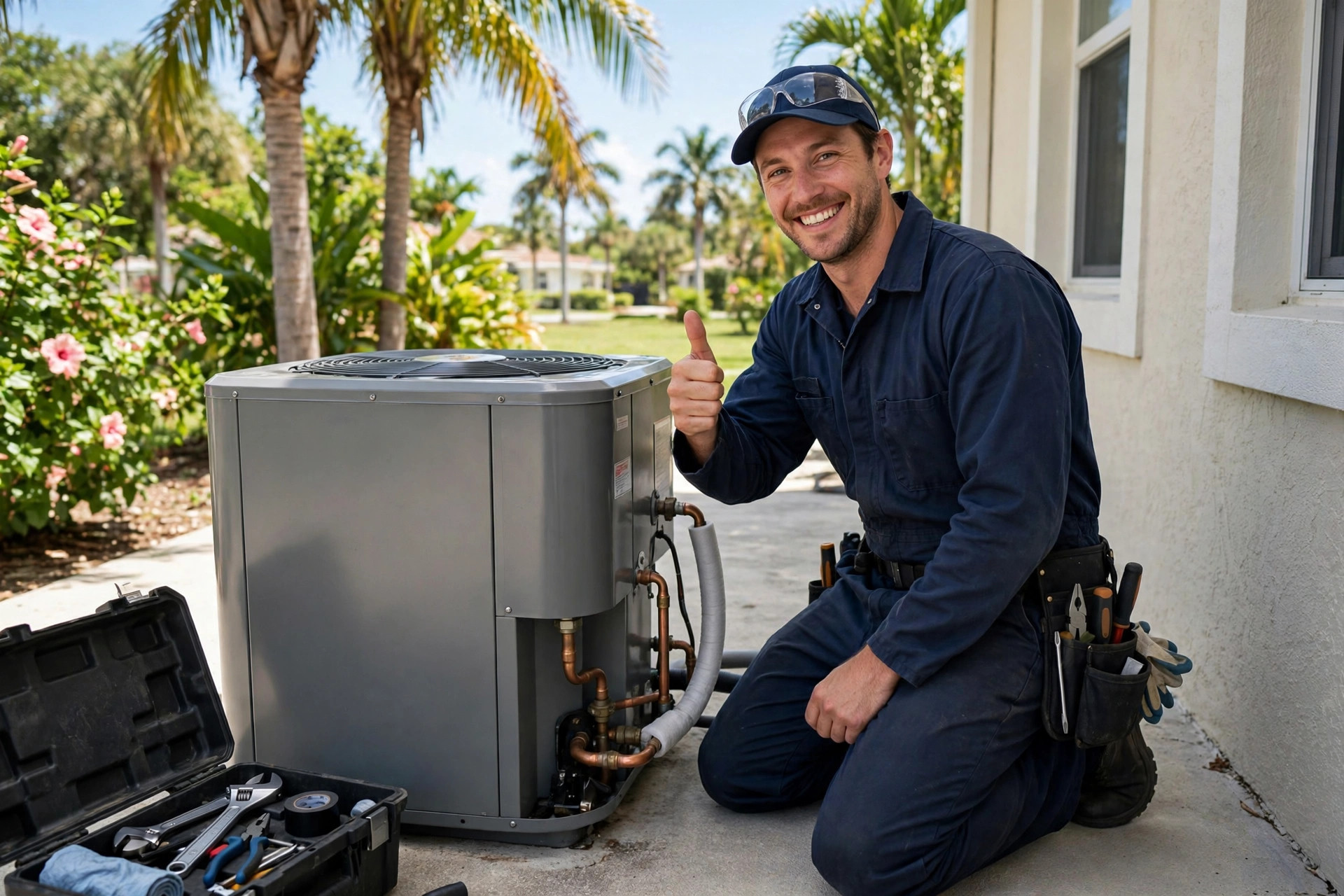
- How a Good Repair Visit Should End
- How to Verify the Fix Before the Technician Leaves
- What's Normal in the First Hours and Days
- Your 24-to-48-Hour Homeowner Checklist
- When "AC Not Working After Repair" Is a Real Problem
- Your Invoice, Your Labor Warranty, and the Manufacturer Warranty
- Simple Habits That Protect the Repair
- The Bottom Line
The technician just packed up the tools and your air conditioner is running again. But a repaired AC doesn't always feel right the moment the truck pulls away — and many Marco Island homeowners aren't sure what they should check, what's normal, and what counts as a callback. Here's the straightforward version.
The short answer: before your technician leaves, the original problem should be demonstrably fixed — cool air at the vents, normal sounds, condensate draining, and the thermostat reaching its setpoint without short cycling. Give the system a full day or two of normal operation to settle in, keep your itemized invoice with the warranty terms, and call back promptly if the original symptom returns within the labor warranty window.
How a Good Repair Visit Should End
A repair isn't finished when the part is installed — it's finished when the system is proven to work again. A thorough technician will walk you through what was done before leaving: which component failed, what was replaced or repaired, and why it failed in the first place. In Marco Island, the usual culprits are electrical components like capacitors and contactors (salt air and near-constant summer runtime are hard on them), followed by condensate drain clogs from our humidity, refrigerant issues, and blower or thermostat problems.
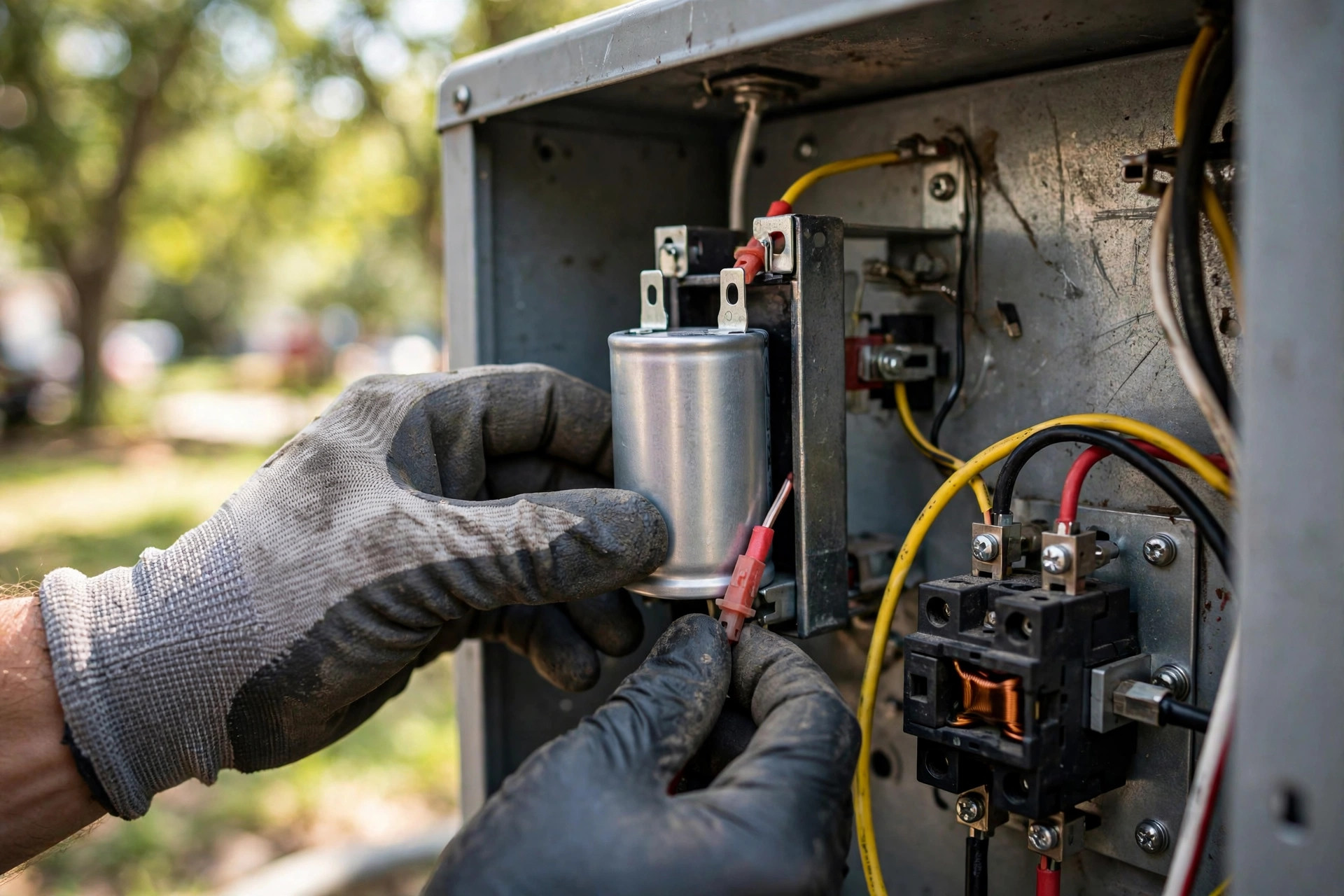
You should also get a final system test. The technician should restart the air conditioner and run it under normal conditions, then confirm the exact symptom that caused the call — no cooling, weak airflow, a strange noise, water at the air handler, repeated shutdowns — is genuinely gone. If your tech skips this step, ask for it. A reputable company like Marco Island AC Services always verifies performance before asking you to sign off.
Don't finalize payment until you've seen the system cooling. That one habit protects you from the most common post-repair disappointment.
How to Verify the Fix Before the Technician Leaves
You don't need gauges or tools to do a basic verification — your eyes, ears, and hands are enough:
- Feel the supply air. After the system has run 10 to 15 minutes, the air coming from the supply vents should feel distinctly cold — most HVAC pros look for supply air roughly 14 to 22 degrees cooler than the room air being drawn into the return. It's not a number you need to measure precisely; it should simply feel clearly and steadily cold, not lukewarm.
- Listen. No grinding, rattling, banging, or electrical chatter. The outdoor condenser fan should hum smoothly, and the indoor air handler should sound like it normally does.
- Check the condensate line. Marco Island's humidity means your evaporator coil wrings a lot of moisture out of the air. Once the coil has cooled down, condensate should be dripping steadily from the drain line outside. No flow on a humid day can signal a clog.
- Watch the thermostat. It should reach your set temperature without the system short cycling — rapidly turning on and off — or running forever without catching up.
- Look around the air handler. No fresh water staining, no ice on the refrigerant lines, and the drain pan area should be dry.
If you notice any of these warning signs while the technician is still there, point them out immediately. It's far easier to address them during the same visit than to schedule a callback.
What's Normal in the First Hours and Days
Even a perfectly executed repair doesn't instantly return your home to normal, for a few honest reasons:
The house needs to recover. If your system was down for hours in Southwest Florida heat, the structure, furniture, and even the walls are holding heat. The AC has to pull all of that stored warmth out of the building, which can take several hours of steady running. Expect longer-than-usual run times on day one — that's the system doing its job, not a sign something is wrong.
Humidity recovery takes time. Your air conditioner dehumidifies as it cools. After a shutdown, indoor humidity spikes quickly in Marco Island's climate, and it takes sustained runtime to wring that moisture back out. If the air feels cool but a little clammy the first evening, give it time.
New components settle in. A new capacitor, contactor, or blower motor may sound very slightly different for the first few cycles. Small operational sounds that fade within a day are normal.
What is not normal: the original symptom coming back — warm air from vents, the same breaker tripping, the same error code, or the same noise. If that happens, skip the waiting game and call the company back.
Your 24-to-48-Hour Homeowner Checklist
For the first couple of days, keep a light eye on these things. If you recently had AC maintenance or a repair visit, this is the same discipline good technicians recommend:
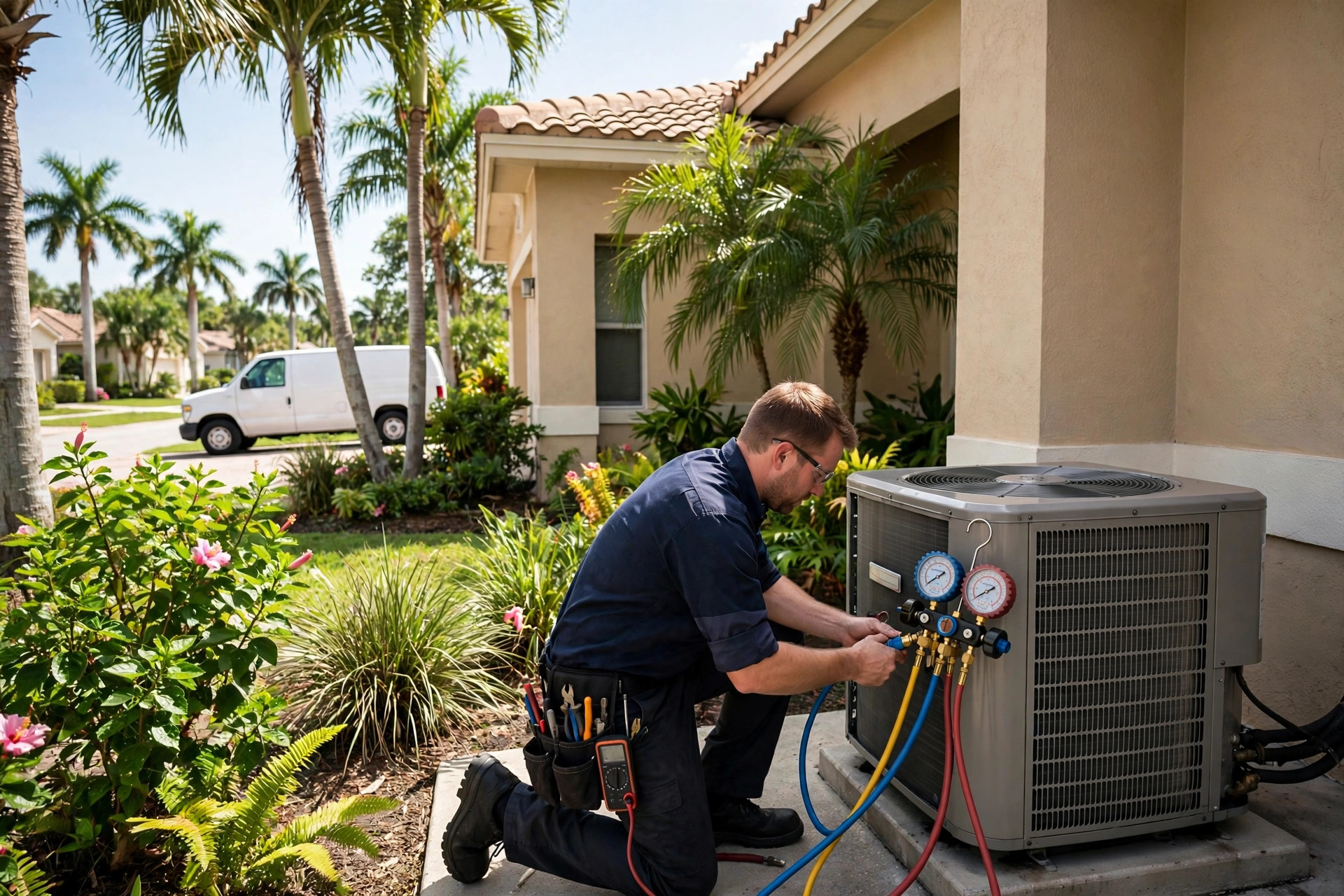
- Thermostat behavior. Does the temperature reach the setpoint and hold it? Note any short cycling or the system running nonstop without reaching temperature.
- Airflow at each vent. Walk the house. Every supply vent should deliver steady, cool airflow. A single weak vent may just be a damper or a duct issue — worth mentioning, but rarely an emergency.
- Condensate drain. Glance at the drain line outlet outside. Steady dripping on a humid day is healthy. A dry line or water backing up near the air handler is not.
- Breakers. If the breaker for the air handler or condenser trips, reset it once. If it trips again, leave it off and call for service — a repeat trip points to an electrical fault.
- Filters. Check that the filter is clean and properly seated. A clogged filter restricts airflow and can make a repaired system behave like a broken one. In our dusty, salt-laden air, monthly filter checks are cheap insurance.
- Outdoor unit. Make sure there's at least two feet of clear space around the condenser — no stacked pool equipment, overgrown vegetation, or debris against the coil.
One more technical note worth knowing: many modern thermostats enforce a roughly three-minute delay before restarting the compressor after it shuts off, so refrigerant pressures can equalize. If the system won't restart immediately after you cycle it, wait a few minutes before assuming there's a problem.
When "AC Not Working After Repair" Is a Real Problem
Search forums are full of the phrase ac not working after repair, and most cases come down to a short list of causes: a misdiagnosis that fixed a symptom rather than the root cause (a dead capacitor is easy to spot, but if the contactor that killed it was the real problem, the new part fails fast), an underlying refrigerant leak that was topped off instead of repaired, a tripped breaker or control-board setting that got missed during reassembly, or — most commonly — airflow restrictions like a dirty filter or a blocked condensate float switch shutting the system down as a safety measure.
If your system stops working after a repair, run through the basics once: thermostat set to cool and below room temperature, breakers on, filter clean, vents open, and no standing water at the air handler. If it's still down, call the company that did the work. A reputable shop stands behind its diagnosis — if the same symptom returns within the labor warranty period, they should come back without charging another diagnostic fee. That's the entire point of the warranty, and it's why you want it in writing.
Your Invoice, Your Labor Warranty, and the Manufacturer Warranty
Before the technician leaves, make sure your invoice spells out four things: the diagnosis, the part numbers installed, any refrigerant added (type and amount), and the labor time — plus the warranty terms on both parts and labor. Repair labor warranties commonly run 30 to 90 days, and parts carry the manufacturer's coverage on top. Terms vary by company and by job, so confirm yours in writing rather than assuming.
Then keep that invoice with your system's records, not in a drawer you never open. It's your proof of warranty, your record of refrigerant service, and — if you ever sell the home — documentation a buyer will appreciate.
Two things that protect the warranty's value:
- Annual maintenance matters. Most equipment warranties require the system to be maintained per the manufacturer's instructions. Proof of yearly professional service is the simplest way to document compliance, and it's also what catches the small issues before they become emergency repairs at 9 p.m. in August.
- Use qualified service. Refrigerant work requires EPA certification, and electrical components like capacitors can hold a dangerous charge even with power off. DIY repairs can void warranties and create safety hazards. Homeowners can handle filters, thermostat settings, and keeping the condenser clear — leave everything else to a licensed technician.
Simple Habits That Protect the Repair
Marco Island is one of the hardest climates in the country on air conditioning: near-constant cooling loads, corrosive salt air, extreme humidity, and — for seasonal homes — long stretches where the system sits idle and then gets slammed back into service. A few habits go a long way:
- Change or check filters monthly, especially during summer. Salt air and sand find their way into everything.
- Keep two feet of clearance around the outdoor unit and gently rinse the condenser coil (power off) a few times a year.
- Pour a cup of white vinegar down the condensate drain access every few months to discourage algae clogs — the number-one cause of emergency water-shutoff trips.
- Schedule professional AC maintenance once a year, ideally in spring before the heavy season.
- If your system is over 12 to 15 years old and repairs are getting frequent, read our guide on AC repair vs. replacement — sometimes the honest math favors a new system.
The Bottom Line
After your AC repair, expect a brief recovery period, watch the system for 24 to 48 hours with the checklist above, and keep your invoice with its warranty terms. If the original problem comes back within the labor warranty window, call the company back — a callback for the same symptom is part of what you paid for. And if your system is aging out or you want it professionally maintained so the next breakdown never happens, request service with Marco Island AC Services at +1 (239) 880-1889. We're here seven days a week, 7 AM to 8 PM.