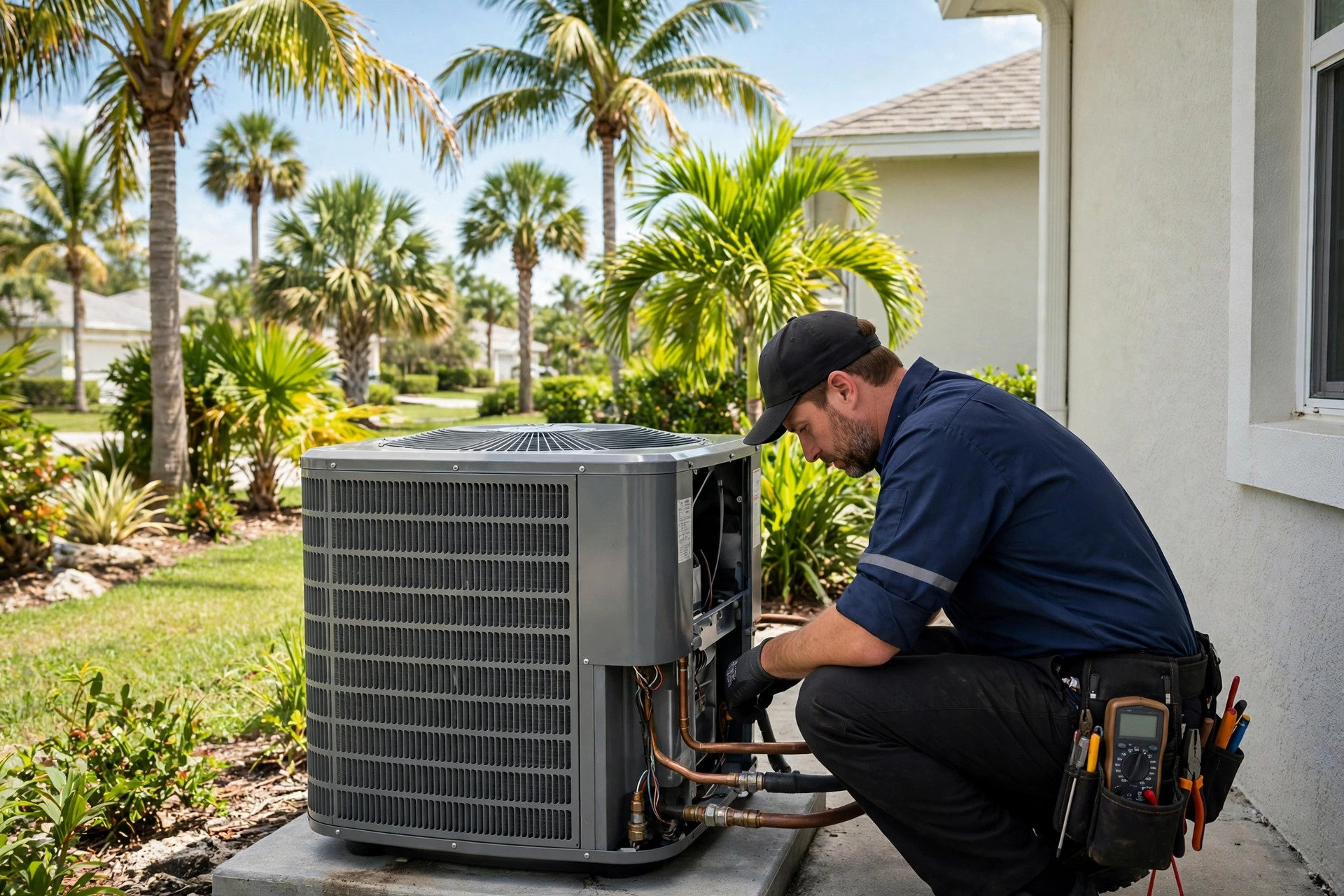
The Short Answer
Yes — sometimes. Homeowners insurance can cover AC repair when the damage comes from a sudden, covered event like lightning, fire, a windstorm, or a falling tree. A home warranty covers the opposite: breakdowns from normal wear and tear that insurance ignores. And taxes only help if the property is a rental or business — repairs on your personal home are not deductible.
The tricky part is that most AC failures fall into the gap between the two: too worn-out for insurance, too sudden for a warranty claim. This guide explains exactly where each option applies so you never pay a bill someone else should have covered — or file a claim that was never going to pay.
When Homeowners Insurance Covers AC Repair
Homeowners insurance is built for sudden, accidental damage — not for equipment that slowly wears out. Your policy covers your AC the same way it covers the rest of your house: the cause of the damage decides everything, not the size of the repair bill.
What your policy typically covers
If a covered peril damages your system, your homeowners policy can pay for the repair or replacement, up to your coverage limits and minus your deductible. Covered perils that commonly affect AC systems include:
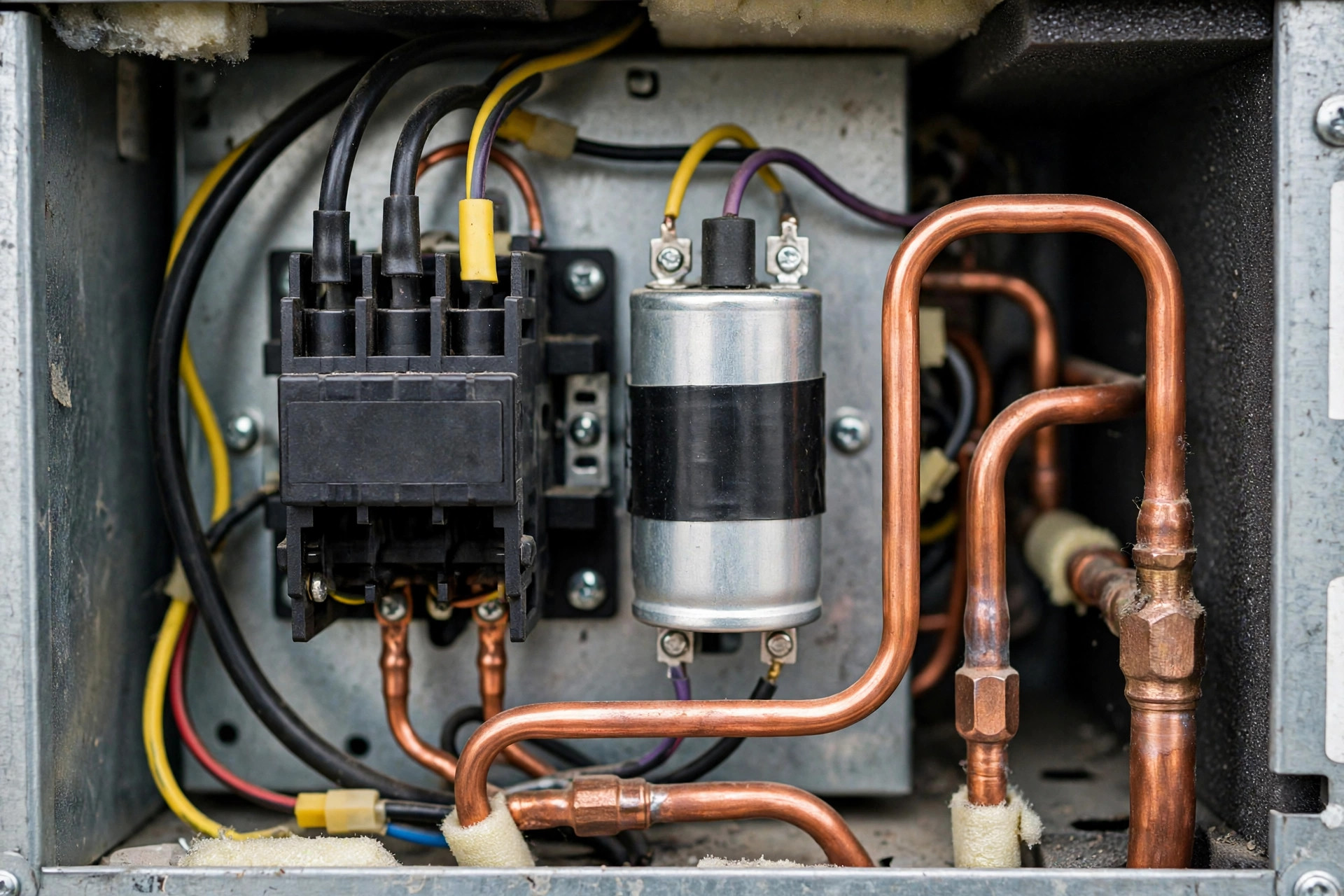
- Lightning strikes — a surge that fries the contactor, capacitor, or control board
- Fire and smoke damage reaching the air handler, ductwork, or outdoor unit
- Windstorm damage — storm debris or a falling palm frond crushing the condenser coils or fan
- Hail damaging exposed outdoor components
- Falling objects — a tree limb landing on the condenser
- Theft or vandalism of the outdoor unit
Which part of your policy responds depends on the equipment. A permanently installed central system — air handler, ductwork, condenser — is part of the home's structure, so dwelling coverage applies. A portable or window unit you own is personal property, so personal property coverage applies instead. Equipment sitting in a detached structure could fall under other-structures coverage.
What insurance never covers
This is where most homeowners get disappointed. Standard policies explicitly exclude:
- Normal wear and tear and age-related failure — a compressor that dies at 14 years old is on you
- Mechanical breakdown unrelated to a covered event
- Lack of maintenance — neglected filters, clogged condensate drains, corroded coils
- Gradual refrigerant leaks from corrosion (extremely common in Marco Island's salt air)
- Pre-existing damage
So if your AC simply stops cooling on a Tuesday in August, insurance will not help. One useful extra: equipment breakdown coverage, available as an endorsement on many homeowners policies, can cover sudden mechanical failures that a standard policy won't — worth asking your agent about if your system is mid-life.
Deductibles and documentation matter
Even a covered claim only pays if the repair exceeds your deductible. For Marco Island homeowners, there's a Florida-specific catch: most Florida policies carry a separate hurricane deductible for windstorm losses, which is typically higher than your standard deductible. A $1,800 coil replacement after a summer storm may not clear it.
If you believe you have a covered loss, documentation is everything. Photograph the damage before anything is moved, keep any storm reports or news coverage of the event, and get a written diagnostic from your HVAC repair technician that connects the failure to the event. Insurers need proof that the damage resulted directly from the covered peril — and an adjuster will argue for repairing only the components the event actually damaged.
One more coastal warning: flood damage is excluded from standard homeowners policies. If storm surge or rising water swamps your outdoor unit, that loss requires separate flood insurance.
Home Warranties: Coverage for Wear and Tear
A home warranty is a service contract, not insurance — and that distinction is exactly why it covers what insurance won't. Home warranties pay for repair or replacement of major systems that fail from normal wear and tear: the slow death of a 12-year-old compressor, a capacitor that finally gives up, a blower motor that quits.
How the numbers usually work
Based on current industry figures: an annual premium typically runs $400 to $900 per year, and each claim carries a service fee (often called a trade service fee) of $65 to $150 per visit — paid to the technician regardless of whether the repair ends up covered. HVAC coverage is capped: common limits run $2,000 to $5,000 per system per contract term. If the repair or replacement costs more than your cap, you pay the difference.
The math works in your favor when the repair is big relative to what you've paid in. A $1,800 compressor replacement against a $600 premium plus a $75 service fee is a clear win. But if you go two years without a claim, you've paid $1,200+ in premiums with zero return — so a warranty makes most sense for older systems, which is exactly what many Marco Island homes have, since salt air and year-round cooling demand shorten equipment life here.
Exclusions that surprise people
Warranty claims get denied for predictable reasons:
- Pre-existing conditions — anything failing before the contract started
- Lack of routine maintenance — corroded components or clogged filters can void a claim
- Improper installation
- Code-compliance upgrades and permit fees (often excluded unless you bought an add-on)
- The labor to find a refrigerant leak — detection labor is frequently not covered under standard terms
If your system is already failing, you can't buy a warranty to cover it. And when a replacement is approved, the warranty company replaces with a comparable unit, not an upgrade — expect like-for-like equipment, not the latest high-SEER2 model.
Insurance vs. Home Warranty at a Glance
| | Homeowners Insurance | Home Warranty |
|---|---|---|
| What it covers | Sudden, accidental damage from listed perils (fire, lightning, wind, hail, falling objects) | Mechanical breakdown from normal wear and tear |
| What it excludes | Wear and tear, age, maintenance neglect | Pre-existing conditions, maintenance neglect, improper installation |
| You pay | Your deductible (plus possibly a higher hurricane deductible in Florida) | Annual premium ($400–$900) + service fee ($65–$150 per visit) |
| Payout limits | Policy dwelling/personal-property limits | Contract cap, commonly $2,000–$5,000 for HVAC |
| Best for | Storm, lightning, or fire damage to the system | Aging equipment failing from use |
Many Marco Island homeowners sensibly carry both: insurance for the hurricane-season catastrophes, a warranty for the inevitable mid-summer wear-and-tear failure. Together they close most of the gap.
Is AC Repair Tax-Deductible?
Here the answer depends entirely on whose property it is.
Your primary residence: no. The IRS does not let homeowners deduct repair costs on a personal home — an AC repair, a tune-up, a capacitor replacement, none of it. One small consolation: a full system replacement is a capital improvement, which gets added to your home's cost basis. That lowers your taxable gain when you eventually sell, so keep every invoice with your closing paperwork.
Rental or business property: yes. Under the IRS tangible property regulations, amounts paid for repairs and maintenance are deductible in the year you pay them, as long as the work restores the system to its prior condition rather than improving it. Replacing a capacitor, patching a refrigerant leak, cleaning condenser coils, and seasonal tune-ups all qualify — and the IRS routine-maintenance safe harbor specifically covers recurring HVAC maintenance you'd expect to perform more than once over a decade.
The line the IRS cares about is repair vs. improvement. Replacing a worn fan motor is a repair (deductible now). Replacing the entire system, adding cooling capacity, or converting fuel types is an improvement — it must be capitalized and depreciated, not expensed all at once. For residential rental property, that depreciation typically runs over 27.5 years. Tax courts have consistently rejected landlords who tried to write off full HVAC replacements as repairs, so classify carefully and keep detailed invoices.
One more tax angle worth knowing: high-efficiency system replacements that went in during 2025 may have qualified for the federal residential energy credit, and rules for later years have changed — so if you're planning an upgrade for tax reasons, check the current year's rules (or ask a tax professional) before counting on a credit.
What to Do Before You Pay the Repair Bill
If you're a Marco Island homeowner staring at an unexpected AC bill, work through this order:
- Determine the cause. Was there a storm, lightning strike, or impact event? If yes, call your insurance agent before a contractor. If the system simply wore out, insurance isn't in play.
- Check your home warranty (if you have one) — confirm HVAC is covered, note the service fee and your cap, and file through their process.
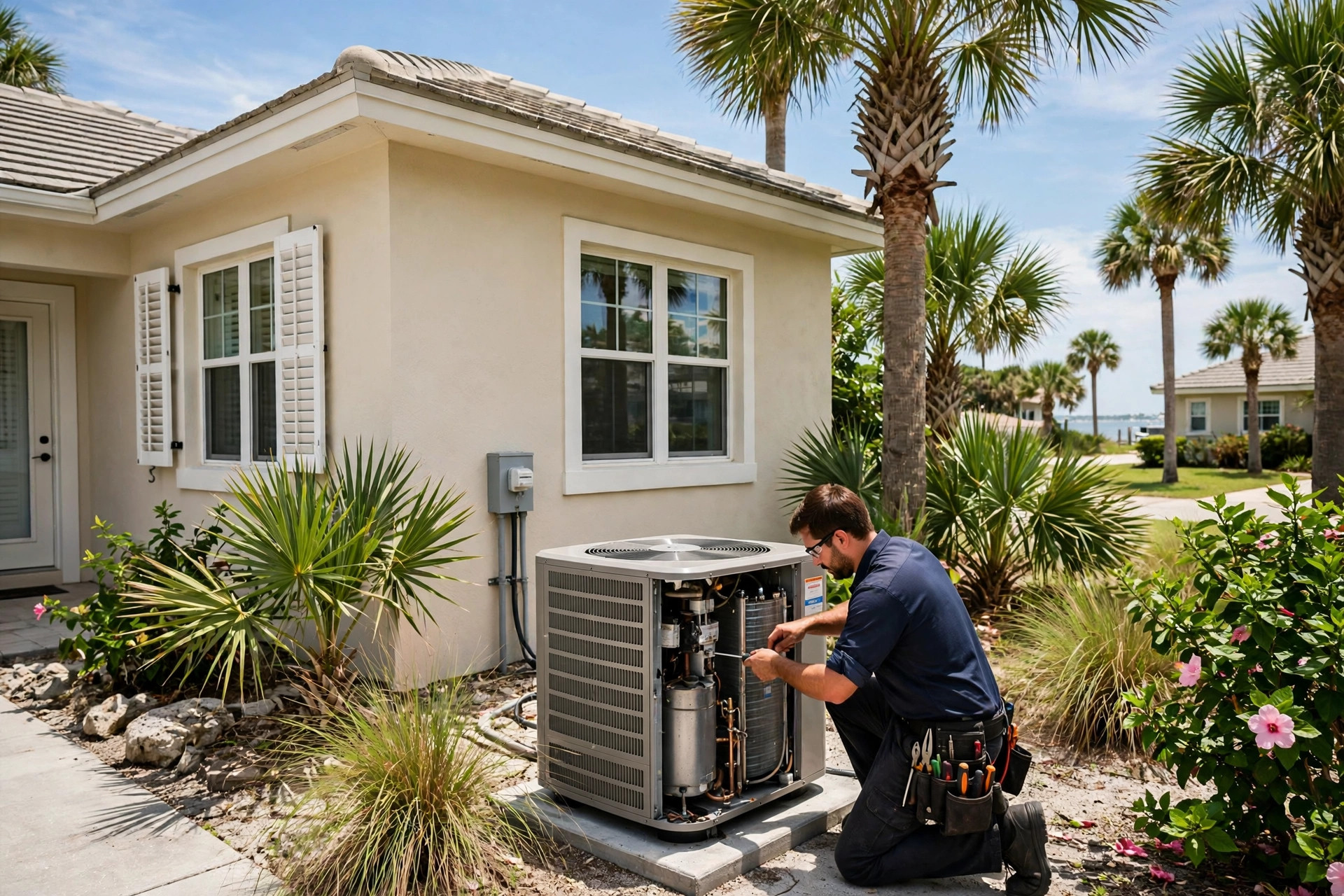
- Get a proper written diagnostic. The cause written on the invoice decides claims, so make sure your technician documents it clearly. If you need one, emergency AC repair service can get you a fast, documented diagnosis.
- Do the math on the deductible or cap. Don't file a $1,200 insurance claim against a $2,500 hurricane deductible, and don't celebrate a warranty approval until you've confirmed the repair fits under your cap.
- Keep every invoice. Whether it's for a future tax basis, a warranty dispute, or just your records, paperwork wins arguments.
And the simplest way to keep repair bills small in the first place: regular AC maintenance. A tune-up won't change what insurance covers, but it prevents the neglect-related failures that both insurance and warranties exclude — and on Marco Island, where salt air eats condenser coils for breakfast, that matters more than almost anywhere else in Florida.
Note: Coverage rules vary by carrier, contract, and tax year. This guide explains how these options generally work — for decisions about a specific claim or deduction, talk to your insurance agent, warranty provider, or tax professional. For the repair itself, call +1 (239) 880-1889 — Marco Island AC Services will diagnose the real cause and give you a straight answer about your options.