- Why Marco Island AC Systems Need a Seasonal Checklist
- The Pre-Summer AC Maintenance Checklist
- AC Maintenance vs. Tune-Up: Is There a Difference?
- What Happens During a Professional Tune-Up
- How Much Does AC Maintenance Cost in Marco Island?
- Your Month-by-Month Marco Island AC Care Calendar
- Seasonal Homes Need Extra Attention
- When to Call a Professional
- Keep Your Cool All Summer Long
Why Marco Island AC Systems Need a Seasonal Checklist
Air conditioners in Marco Island work harder than in most places. Cooling seasons run long, humidity stays high for months, and salt air slowly corrodes outdoor equipment. A system that runs nearly year-round accumulates wear faster — which is why a structured AC maintenance checklist matters more here than in milder climates.
The goal of seasonal air conditioner maintenance is simple: catch small problems before they become emergency breakdowns in July. If your home sits vacant part of the year, the checklist matters even more, since issues can develop unnoticed for months. Learn more about our professional AC maintenance in Marco Island.
Regular HVAC maintenance also protects your energy bills. A dirty evaporator coil, a struggling blower motor, or low refrigerant forces the system to run longer cycles to reach the same temperature — and in a climate where the AC runs most of the year, even a small efficiency loss adds up fast on Florida electric bills.
The Pre-Summer AC Maintenance Checklist
Work through these items before the cooling season ramps up. The first group is safe homeowner maintenance; the deeper checks belong in a professional AC tune-up in Marco Island.
1. Replace or Clean the Air Filter
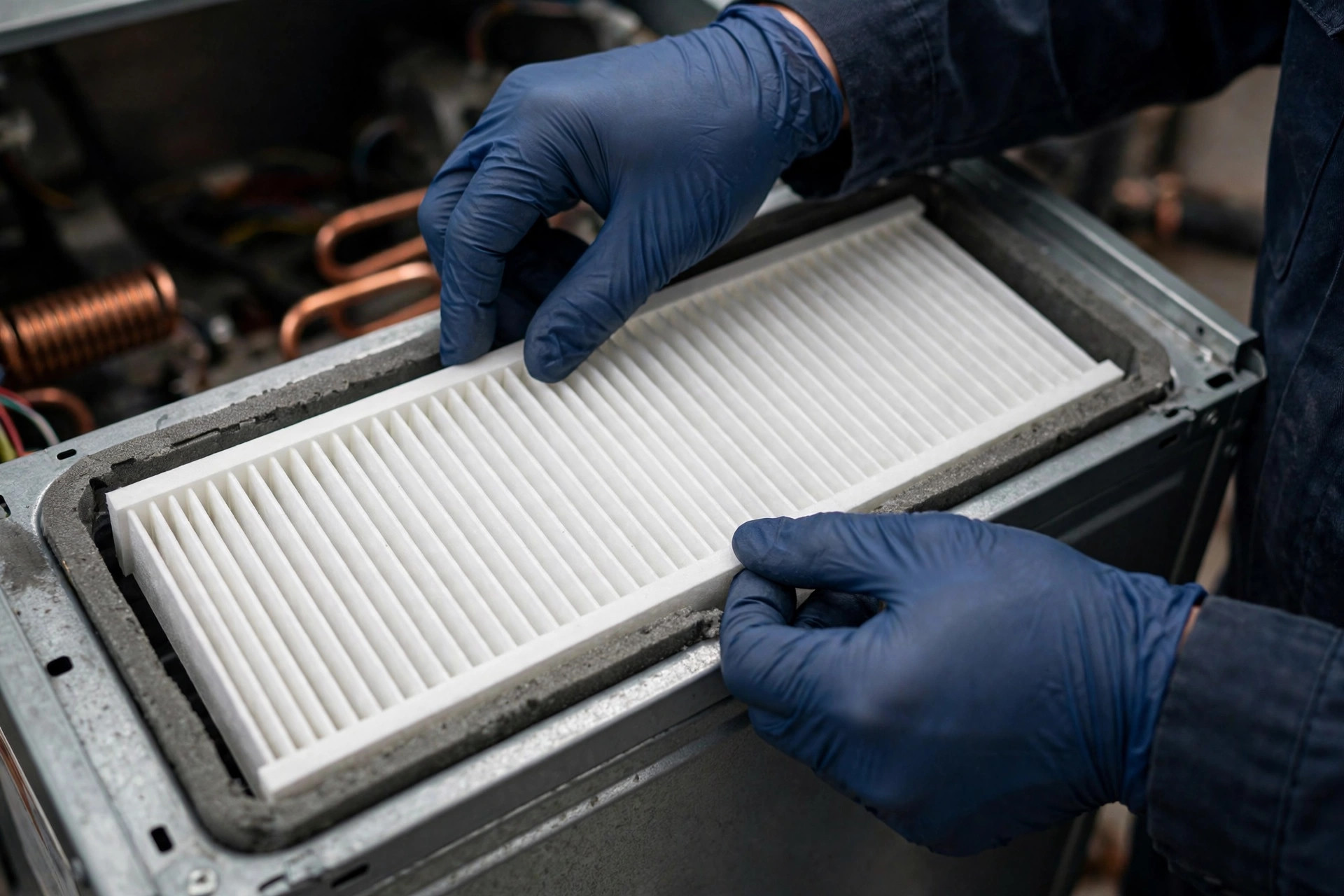
A clogged filter is the most common cause of weak airflow and frozen evaporator coils. Check the filter monthly during heavy-use months and replace it at least every 1–3 months. Homes with pets or seasonal dust buildup may need more frequent changes. Restricted airflow doesn't just reduce comfort — it strains the blower motor and can ice over the evaporator coil, turning a $20 filter into a service call.
2. Clear Debris Around the Outdoor Unit
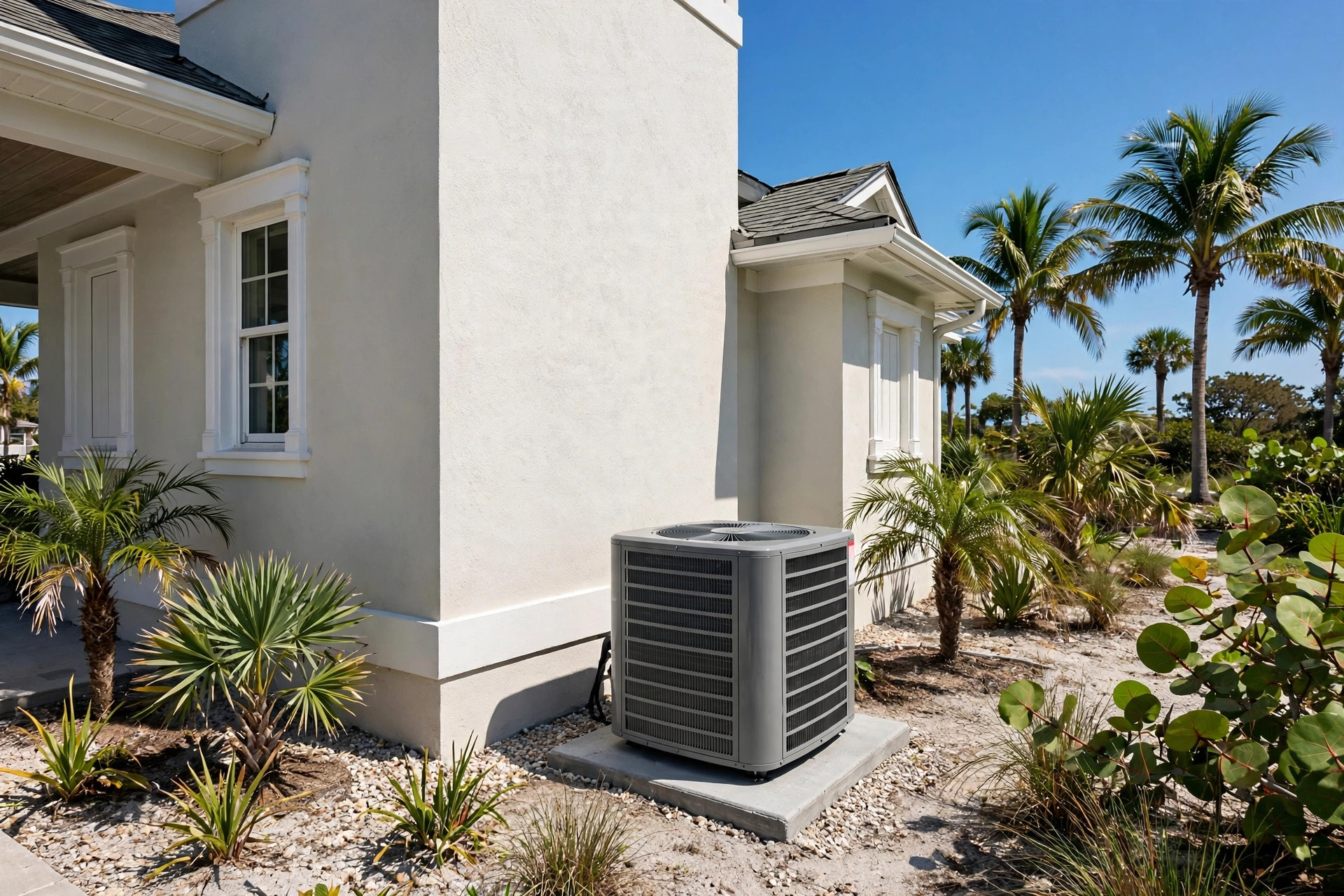
The condenser needs clear airflow on all sides. Trim back vegetation, remove leaves and palm fronds, and rinse away visible dirt from the unit's exterior. Keep at least two feet of clearance around the equipment. On Marco Island, also watch for sand and salt residue coating the condenser coil fins — a gentle rinse with a garden hose (never a pressure washer) helps the coil release heat efficiently.
3. Inspect the Condensate Drain Line
Marco Island's humidity means your system pulls gallons of moisture from the air every day. A clogged condensate drain can cause water leaks, musty odors, and even system shutdowns when the float switch trips. During a tune-up, technicians flush the drain line and test the float switch that protects against overflow. If you see water pooling near the indoor air handler, treat it as an early warning, not a quirk.
4. Check the Thermostat
Test that the thermostat reads accurately and responds to setting changes. If some rooms feel warmer than others, the issue may be calibration, sensor placement, or airflow — not the equipment itself. Consider the difference a proper HVAC system diagnosis can make before assuming the worst. Smart thermostats with humidity sensing are worth considering for Marco Island homes, since indoor humidity control matters as much as temperature here.
5. Look and Listen for Warning Signs
Walk through your home while the system runs. Note any rooms with weak airflow, unusual noises from the indoor or outdoor unit, musty smells from vents, or water stains near the air handler. Write these down — they help a technician diagnose faster. Grinding or squealing often points to blower motor bearings; buzzing near the outdoor unit can indicate a failing capacitor or contactor.
6. Review Electrical Components
Capacitors, contactors, and wiring degrade over time, and Florida's heat and storm-season power fluctuations accelerate the process. Electrical inspection is a job for a certified technician, but you can note symptoms like the system struggling to start or tripping breakers. A capacitor check takes minutes during a maintenance visit and prevents one of the most common no-cool failures.
7. Evaluate Overall System Age and Condition
If your system is over 10–12 years old and running in coastal air, pay attention to rising energy bills and declining comfort. These are early signals that replacement planning may be smarter than another round of repairs. When the time comes, our AC replacement specialists can walk you through high-SEER2 options built for coastal Florida — or start with AC installation guidance if you're adding cooling to a new space.
Coastal tip: Salt-air corrosion attacks outdoor coils and fasteners first. Ask your technician specifically about corrosion during the tune-up — catching it early can add years to the equipment's life.
AC Maintenance vs. Tune-Up: Is There a Difference?
Homeowners often use "maintenance" and "tune-up" interchangeably, and for practical purposes they're describing the same visit: a scheduled, preventive service where a technician inspects, cleans, tests, and calibrates the system. What matters isn't the label — it's what's actually included. A real seasonal AC maintenance visit should cover the full checklist in the next section, not just a filter swap and a quick glance. When comparing providers in Marco Island, ask for their tune-up checklist in writing; a thorough visit takes 60–90 minutes for a typical residential system.
What Happens During a Professional Tune-Up
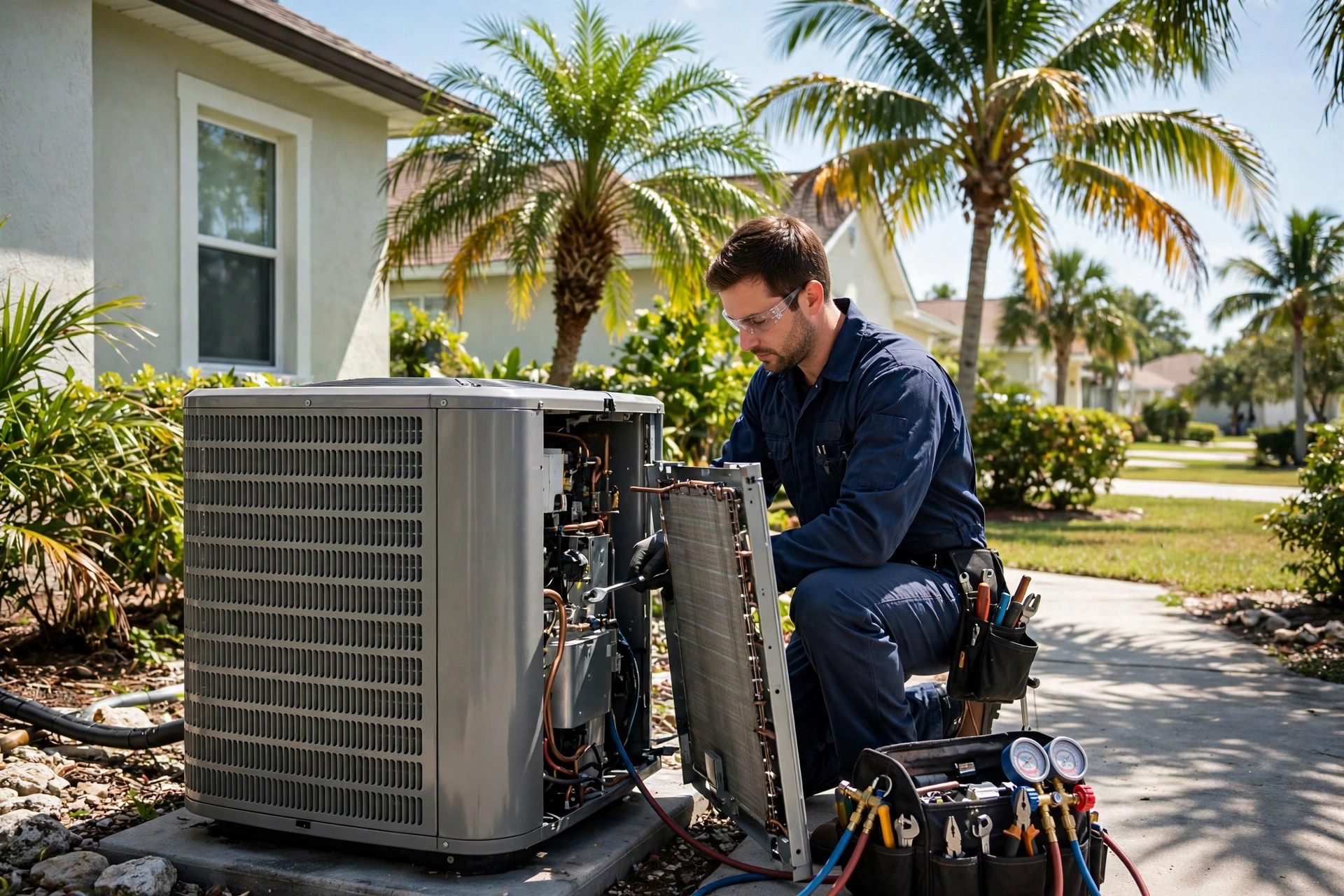
A professional maintenance visit goes well beyond the homeowner checklist. A certified technician will:
- Measure refrigerant levels and check for leaks
- Clean evaporator and condenser coils
- Test capacitors, contactors, and electrical connections
- Flush and test the condensate drain system
- Measure airflow and temperature differential
- Inspect ductwork connections for leaks
- Calibrate the thermostat
This kind of comprehensive inspection is what separates a quick filter change from real preventive care — and it's the best defense against a middle-of-summer emergency. Technicians also check the temperature differential across the evaporator coil (typically 16–22°F for a healthy system), which reveals airflow or refrigerant problems long before you'd feel them.
How Much Does AC Maintenance Cost in Marco Island?
A standard residential tune-up costs far less than even a minor repair — which is exactly the point of preventive care. Pricing varies with system type (central air, ductless mini-split, or heat pump), accessibility of the equipment, and whether the visit includes chemical coil cleaning or drain treatments. Many Marco Island homeowners save with an annual maintenance plan that bundles the pre-summer tune-up with priority scheduling and repair discounts. Compared to the cost of a failed compressor or a flooded ceiling from a backed-up drain line, scheduled maintenance is the cheapest insurance your cooling system can get.
Your Month-by-Month Marco Island AC Care Calendar
March–April (pre-season): Schedule your professional tune-up before the first heat wave. Replace filters, clear the condenser area, and test the thermostat after any winter idleness.
May–September (peak season): Check filters monthly. Keep vegetation trimmed around the outdoor unit. Watch for warning signs — weak airflow, new noises, or rising bills — and call early rather than waiting for a breakdown.
October–November (post-season): A second filter change and a quick visual inspection after the heavy season. For seasonal residents closing up the home, this is the time to set humidity controls correctly (see below).
December–February (mild months): Even when cooling demand drops, run the system briefly each month to keep components lubricated and the drain line from drying out and clogging.
Seasonal Homes Need Extra Attention
Many Marco Island properties sit vacant for part of the year. Before an extended vacancy, set the thermostat to a humidity-control setting (typically around 78°F with the fan on "auto") rather than turning the system fully off — Florida homes can develop mold and moisture damage within weeks without dehumidification. A smart thermostat with humidity alerts adds real peace of mind, letting you confirm the system is cycling while you're away.
After returning, run through this checklist before the cooling season ramps up, since filters, drains, and electrical components may have deteriorated unnoticed. Pay special attention to the condensate drain — months of disuse let algae and sediment build up, and the first heavy cooling cycle is when clogs reveal themselves as ceiling stains. A pre-arrival AC maintenance visit is the simplest way to walk into a cool, dry home instead of a service emergency.
When to Call a Professional
Some maintenance is safe DIY work: filters, debris clearance, and vent checks. But call a certified Marco Island HVAC technician when you notice warm air from vents, ice on refrigerant lines, water pooling near the air handler, burning smells, or breakers tripping repeatedly. These symptoms point to problems that need professional testing — not guesswork.
Keep Your Cool All Summer Long
Seasonal AC maintenance in Marco Island isn't an upsell — it's how cooling systems survive salt air, marathon cooling seasons, and months of high humidity. Work the homeowner checklist each spring, schedule a professional tune-up before summer, and keep an eye on the warning signs between visits. Do that consistently, and your system will reward you with lower bills, steadier comfort, and far fewer emergency calls.